

Kolkata does not ask to be liked. It grows on you slowly, through a tram bell here, a plate of jhalmuri there, until one day you realise you are in love with the whole chaotic, poetic mess of it. If you are wondering where to start, here are 10 places that capture the soul of the City of Joy, complete with the nearest metro station, exact timings, entry fees, and the kind of insider tips only a local would know.
In this article
- 1. Victoria Memorial
- 2. Howrah Bridge
- 3. Dakshineswar Kali Temple
- 4. Indian Museum
- 5. Jorasanko Thakurbari
- 6. Science City
- 7. Eden Gardens
- 8. Kalighat Kali Temple
- 9. Prinsep Ghat
- 10. Birla Planetarium
- Quick Reference Table
- FAQ
Note : Timings and entry fees are subject to change without notice. It is always a good idea to confirm at the counter or official source before you plan your visit.
1. Victoria Memorial: Kolkata’s White Marble Heart
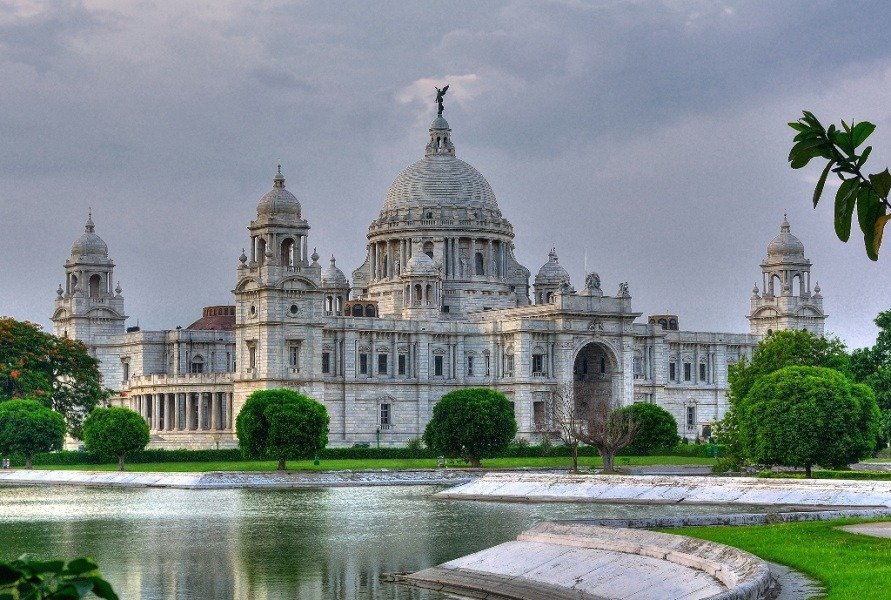
No list of Kolkata’s soul-stirring places can begin anywhere else. The Victoria Memorial rises out of 64 acres of manicured lawns like something out of a dream, a white marble monument built by Lord Curzon to honour Queen Victoria, and today it is simply Kolkata’s most photographed face. Inside, 25 galleries walk you through the Raj era, the freedom struggle, and the city’s own layered history, while outside, the gardens fill up every evening with couples, joggers, and grandparents feeding pigeons.
Nearest Metro: Maidan or Rabindra Sadan Metro Station (Blue Line/Line 2), roughly 1 km, a short walk or auto ride away.
Timings: Gardens open 5:30 AM to 6:30 PM daily. Museum galleries open 10 AM to 5 PM, Tuesday to Sunday (closed Monday). Light and Sound show runs most evenings, language varies by day.
Entry Fee: Garden only ₹20. Museum entry (Indians) ₹30. Foreign nationals ₹500, SAARC nationals ₹100. School children in uniform and army personnel enter free. Light and Sound show ₹100.
Best Time to Visit: Early morning for soft light and empty lawns, or just before sunset for the golden hour glow on the marble.
Insider tip: Photography is not allowed inside the galleries, so save your camera for the gardens and the building’s exterior. If you are short on time or budget, the garden-only ticket still gets you the postcard view.
2. Howrah Bridge: The Bridge That Never Sleeps
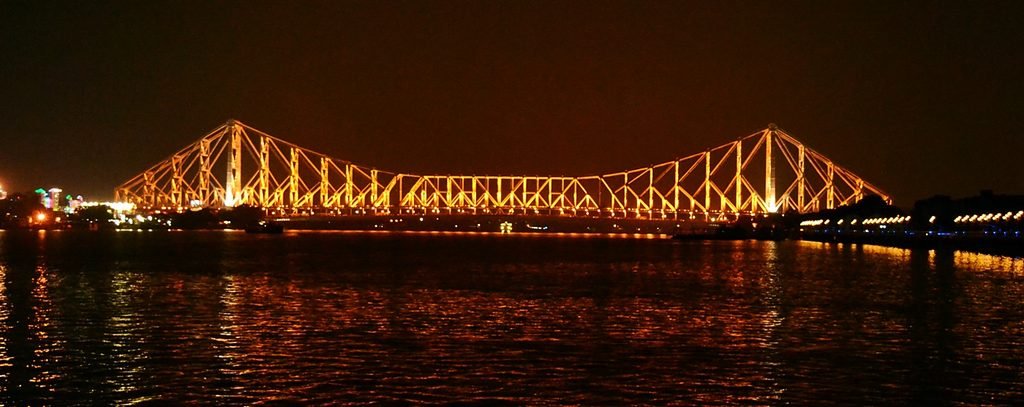
Officially called Rabindra Setu, Howrah Bridge is less a piece of infrastructure and more a character in the city’s story. Built in 1943 without a single nut or bolt, held together entirely by rivets, it carries an estimated 100,000 vehicles and countless pedestrians every single day, connecting Kolkata to its twin city of Howrah across the Hooghly. Stand on the riverbank at dawn and watch the whole city wake up beneath its steel arches.
Nearest Metro: Mahatma Gandhi Road (MG Road) Metro Station, about 1.5 km away.
Timings: Open 24 hours, every day.
Entry Fee: Free, for both pedestrians and vehicles.
Best Time to Visit: Early morning before office traffic sets in, or after dark when the bridge is lit up and reflected in the river.
Insider tip: Photography from on top of the bridge is restricted for security reasons, so the real money shot comes from Prinsep Ghat, Mullick Ghat or a ferry crossing the Hooghly river from Millenium park. Pair your visit with these to experience the stellar beauty of Howrah bridge.
3. Dakshineswar Kali Temple: Where Devotion Meets the River
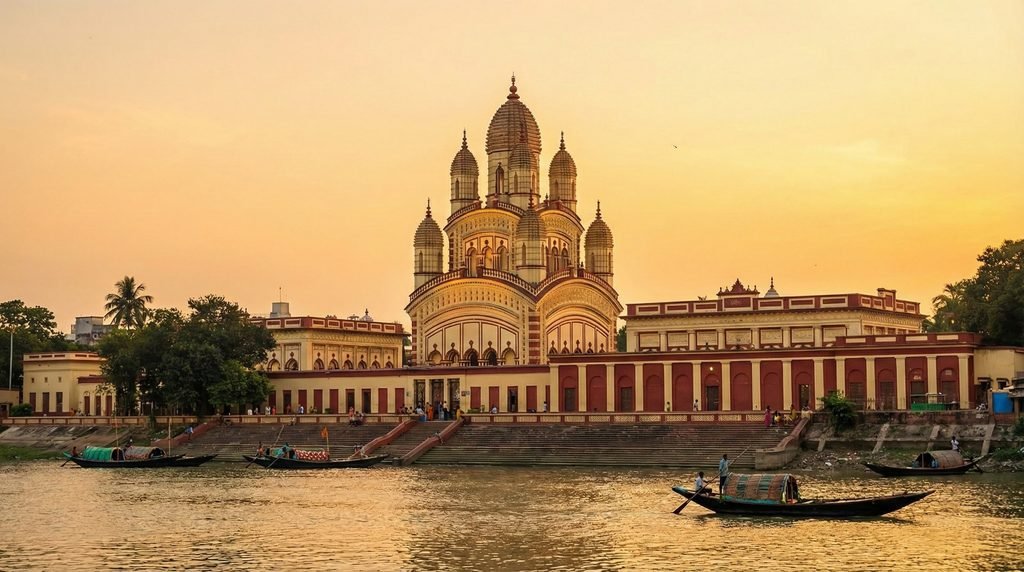
Built in 1855 by Rani Rashmoni, Dakshineswar Kali Temple sits on the eastern bank of the Hooghly in the traditional Nabaratna, or nine-spire, style of Bengal architecture. It is dedicated to Bhavatarini, a form of Goddess Kali, and is forever linked to the saint Ramakrishna Paramahansa, who lived and meditated within its walls. Twelve smaller Shiva temples flank the main shrine, and the whole complex feels like stepping into a quieter, older Bengal.
Nearest Metro: Dakshineswar Metro Station sits directly beside the temple, about a 5 to 10 minute walk via the Rani Rashmoni Skywalk.
Timings: October to March, 6 AM to 12:30 PM and 3 PM to 8:30 PM. April to September, 6 AM to 12:30 PM and 3:30 PM to 9 PM. Open daily.
Entry Fee: Free.
Best Time to Visit: Early morning for a peaceful darshan, or the evening aarti for a more spiritual, music-filled atmosphere.
Insider tip: Tuesdays and Saturdays are considered especially auspicious for Kali worship, but they also draw the biggest crowds. If you prefer a calmer visit, go on a regular weekday morning. A short ferry ride across the river takes you to Belur Math, the headquarters of the Ramakrishna Mission, making a lovely combined half-day trip.
4. Indian Museum: The Original Jadughar
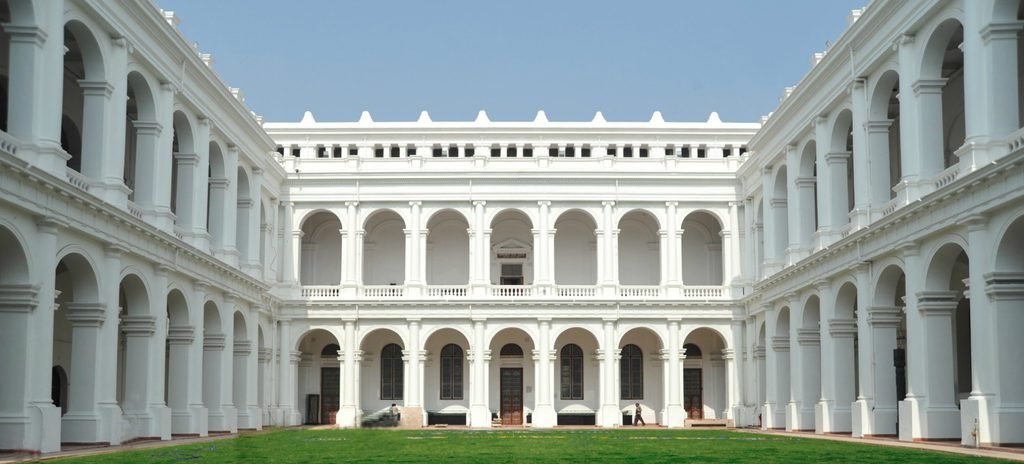
Founded in 1814, the Indian Museum is the oldest and largest museum in Asia and the ninth oldest in the world, which is exactly why Kolkatans still call it Jadughar, the house of magic. Spread across 35 galleries covering art, archaeology, anthropology, geology, zoology, and economic botany, it is home to an Egyptian mummy, Ashokan pillar fragments, dinosaur fossils, and Mughal-era paintings, all under one Italianate roof at the edge of Park Street.
Nearest Metro: Park Street Metro Station, a 5 to 6 minute walk from the exit.
Timings: 10 AM to 6 PM, Tuesday to Sunday, closed Mondays and major national holidays.
Entry Fee: Indian adults around ₹50, children (5 to 12 years) and students around ₹20, foreign nationals around ₹500. Fees are revised periodically, so it is worth confirming at the counter.
Best Time to Visit: Weekday mornings, when school groups and weekend crowds have not yet arrived.
Insider tip: Give yourself at least two to three hours, the museum is genuinely huge and easy to get lost in. The mummy and the Bharhut Gallery sculptures are the crowd favourites, but the coin gallery is a quiet, underrated gem.
5. Jorasanko Thakurbari: Tagore’s House of Poetry
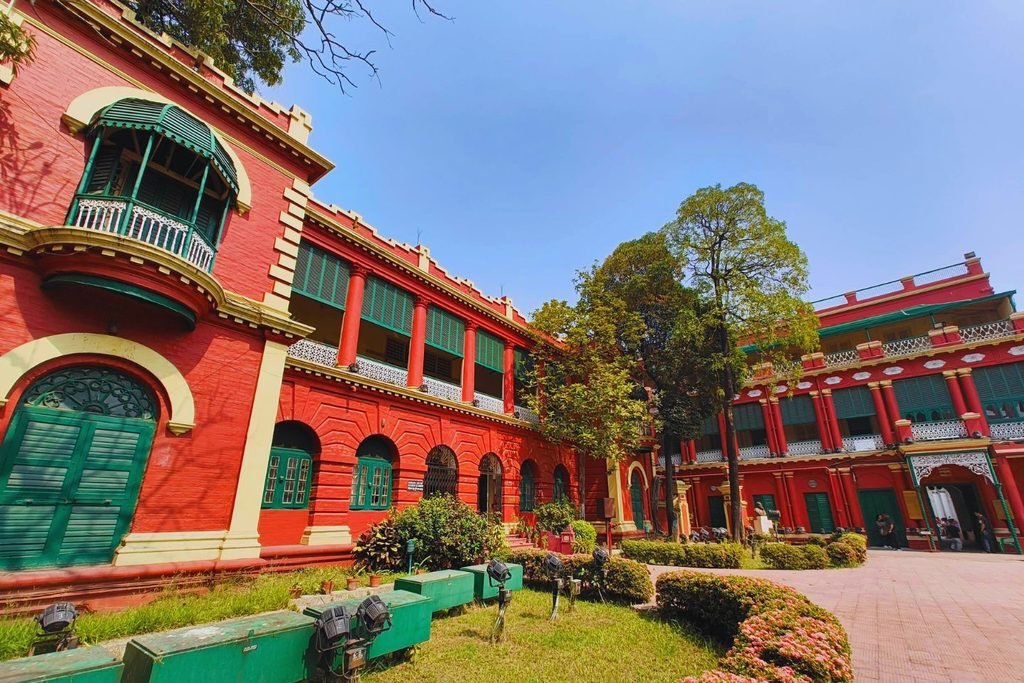
This red brick mansion in North Kolkata is where Rabindranath Tagore was born, grew up, and eventually passed away, and it is impossible to walk through its courtyards without feeling the weight of everything written and painted within these walls. Now home to the Rabindra Bharati Museum, Jorasanko Thakurbari blends traditional Bengali courtyard architecture with colonial detailing, and its galleries trace the Tagore family’s outsized influence on Bengal’s art, literature, and the Bengal Renaissance itself.
Nearest Metro: Girish Park Metro Station, about 1 km, a comfortable 10 to 12 minute walk.
Timings: 10:30 AM to 5 PM, Tuesday to Sunday, closed Mondays and public holidays.
Entry Fee: Indian adults ₹20, SAARC nationals ₹30, foreign nationals ₹150. Photography inside costs an extra ₹50.
Best Time to Visit: Late morning on a weekday, between 10:30 and 11:30 AM, tends to be the quietest window.
Insider tip: Look out for the seasonal Light and Sound show held some evenings between November and June. Once you are done, the narrow lanes around Jorasanko lead you straight to the Kumartuli potters’ quarter and the Marble Palace, both worth folding into the same North Kolkata afternoon.
6. Science City: Kolkata’s Playground for Curious Minds
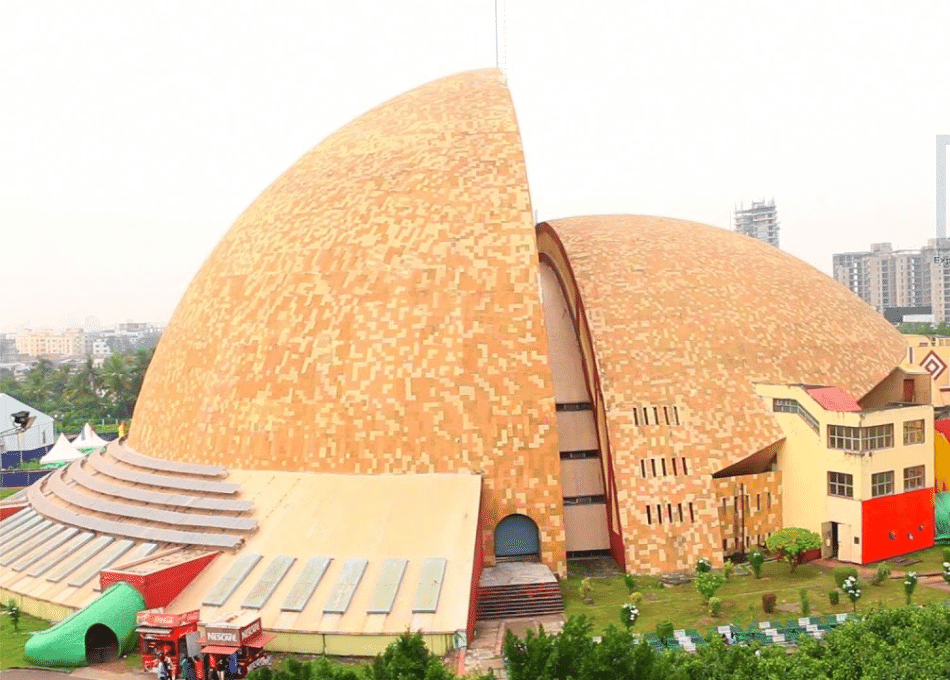
Science City is the largest science centre in India, run by the National Council of Science Museums, and it manages the rare trick of being genuinely educational without ever feeling like a classroom. The Dynamotion Hall, Space Odyssey theatre, Evolution of Life gallery, and the sprawling outdoor Science Park make it a favourite for families and school trips, but plenty of adults quietly enjoy it just as much.
Nearest Metro: Barun Sengupta (Science City) Metro Station on the Orange Line, though this stretch currently runs on weekdays only, so plan a cab or auto if you are visiting on a weekend.
Timings: Daily, 9 AM to 7 PM.
Entry Fee: General entry around ₹60 to ₹80 per person, with separate tickets for the 3D theatre, Space Odyssey, and other special exhibits.
Best Time to Visit: Weekday mornings between 10 AM and 12 PM, and the cooler months from October to March.
Insider tip: Budget four to five hours if you want to see everything properly. Buy your Space Odyssey and 3D theatre tickets as soon as you arrive, since the popular shows sell out fast on weekends and holidays.
7. Eden Gardens: The Mecca of Indian Cricket
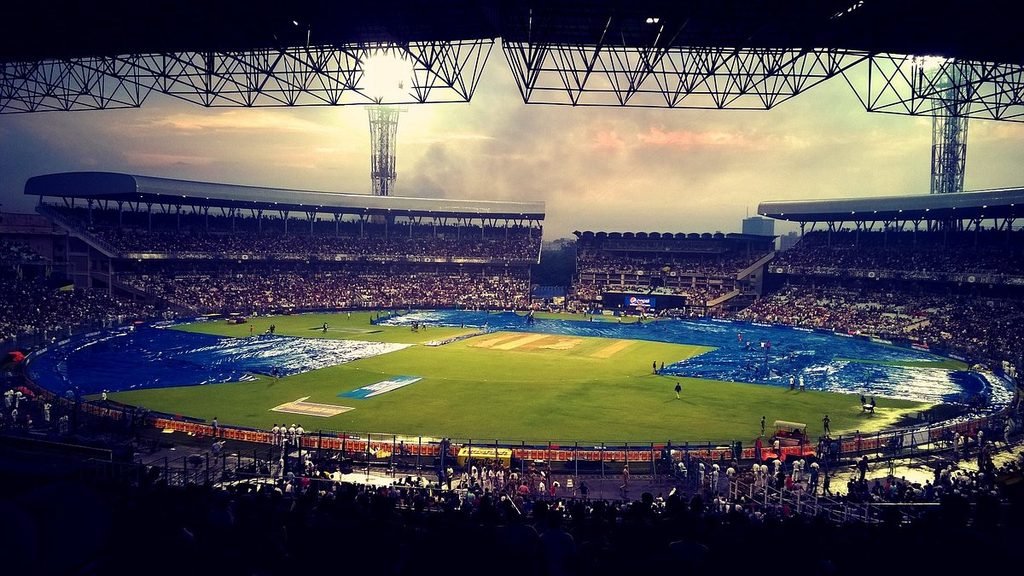
Eden Gardens is the oldest cricket stadium in India and the third largest in the world after the Melbourne Cricket Ground, and it has earned nicknames like the “Colosseum of cricket” and “Mecca of Indian Cricket” for good reasons. Home to the Bengal Ranji team and the Kolkata Knight Riders, this is where 68,000 voices can turn a quiet afternoon into a roar you feel in your chest. Even on a non-match day, walking past its curved stands facing the Maidan is worth the detour.
Nearest Metro: Esplanade Metro Station, about 1 km away, or the newer Eden Gardens Metro Station on the Green Line.
Timings: The surrounding park is open daily from 6 AM to 6 PM. The stadium interior is generally closed to the public on non-match days except through pre-arranged tours.
Entry Fee: Park access is largely free. Non-match day guided tours, where available, cost around ₹50. Average match tickets range from roughly ₹300 to ₹2,500 depending on the seat and the game.
Insider tip: If your trip lines up with an IPL or international fixture, book match tickets in advance and experience the famous Eden Gardens roar firsthand, nothing else in the city sounds quite like it. On other days, a sunset walk along the Maidan side of the stadium is a lovely way to end an afternoon.
8. Kalighat Kali Temple: The Shrine That Named a City
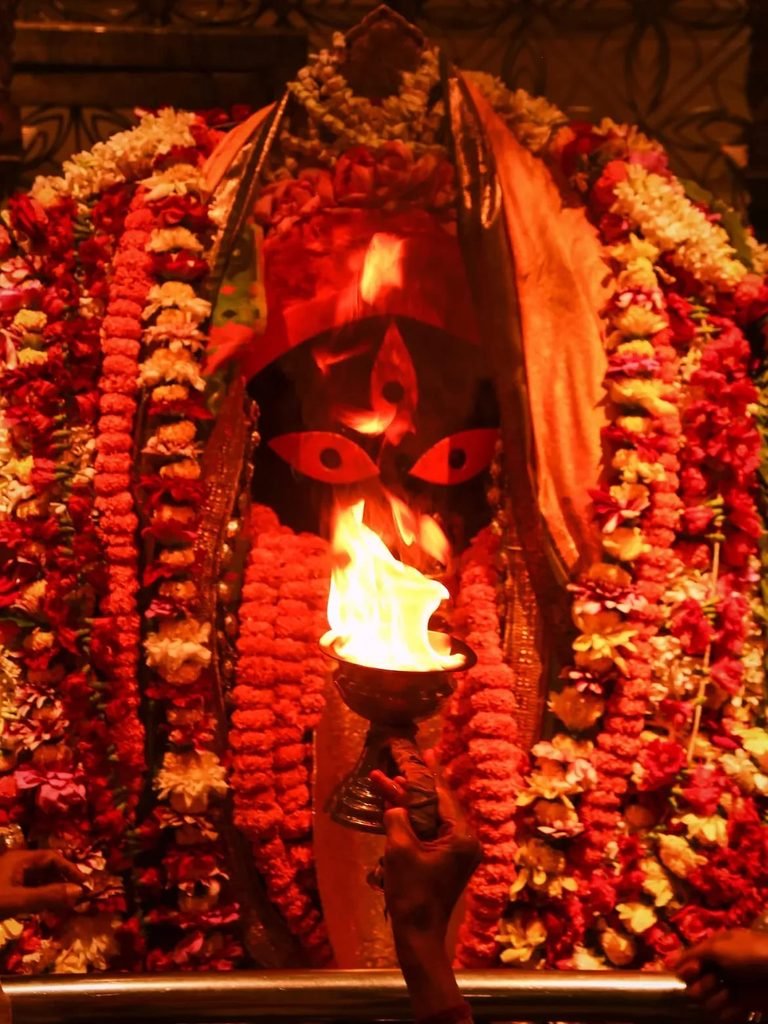
Many believe Kolkata itself takes its name from Kalikshetra, the field of Kali, and this temple is why. One of the 51 Shakti Peethas of India, Kalighat Kali Temple has drawn devotees for centuries with its fierce, three-eyed idol of Goddess Kali. The narrow lanes leading up to it, lined with flower sellers and prasad shops, are as much a part of the experience as the temple itself.
Nearest Metro: Kalighat Metro Station (Line 1), a 5 to 10 minute walk, with Jatin Das Park Metro Station as a nearby alternative.
Timings: 5 AM to 2 PM and 5 PM to 10:30 PM, daily.
Entry Fee: Free for regular darshan, with a paid VIP darshan option to skip the queue.
Best Time to Visit: Early morning for a shorter queue and a calmer atmosphere. Tuesdays and Saturdays are spiritually significant but noticeably busier.
Insider tip: Footwear must be deposited outside and photography is not permitted inside the sanctum, so keep your phone switched off or in flight mode once you are in the queue. After your visit, take a quiet moment at the adjoining Adi Ganga ghat.
9. Prinsep Ghat: Kolkata’s Golden Hour Address
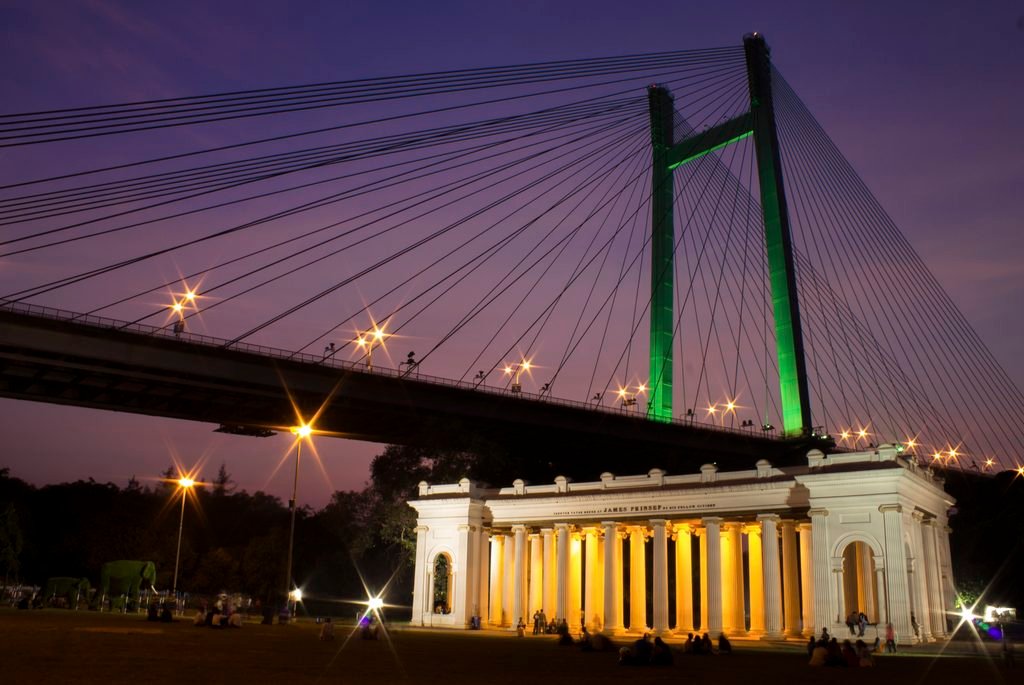
If Kolkata has a single spot built for slow evenings, it is Prinsep Ghat. This Palladian style riverside monument was built in 1841 in memory of the orientalist James Prinsep, and today it is where the city comes to watch the sun dip behind the Vidyasagar Setu, share a plate of phuchka, or drift along the Hooghly on a rented boat.
Nearest Metro: Maidan Metro Station, roughly a 10 to 15 minute walk.
Timings: Open all day with no fixed hours. Boat rides typically run 6 AM to 9 AM and again 4 PM to 8 PM.
Entry Fee: Free to enter. Boat rides cost roughly ₹200 to ₹500 depending on duration and boat type.
Best Time to Visit: Sunset, when the light turns golden over the river and the bridge lights start coming on.
Insider tip: Skip the touristy paid photo booths and just walk the promenade with a plate of jhalmuri from one of the roadside stalls, that is the real Prinsep Ghat experience. It also pairs beautifully with an evening at Eden Gardens or the Victoria Memorial, all three are within easy reach of each other.
10. Birla Planetarium: A Date With the Night Sky
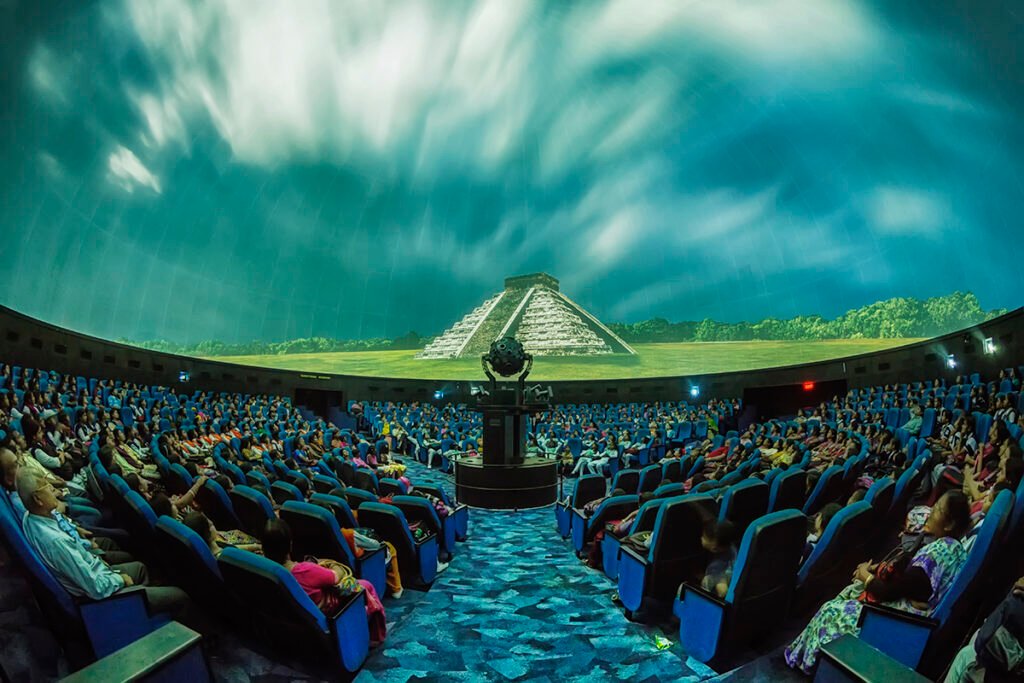
Modelled on the great Buddhist stupa at Sanchi, the M. P. Birla Planetarium has been sending Kolkatans on journeys through the cosmos since 1963. It is the largest planetarium in Asia and among the biggest in the world, with a 23 metre dome that seats nearly 700 people under a sky full of projected stars. Between astronomy shows on black holes, the zodiac, and space exploration, there is also a small astronomy gallery and an electronics lab worth a wander, all just a few minutes’ walk from Victoria Memorial.
Nearest Metro: Maidan or Rabindra Sadan Metro Station, both within easy walking distance.
Timings: 12 PM to 6:30 PM, daily, with multiple shows through the day in Bengali, Hindi, and English. Closed on the first Thursday of every month.
Entry Fee: General admission around ₹140 per person, with a discounted rate of around ₹70 for students in groups of 25 or more. Fees are revised periodically, so it is worth confirming show timings and prices at the counter.
Best Time to Visit: Early afternoon, so you can catch a show and still have daylight left to walk over to Victoria Memorial or St. Paul’s Cathedral next door.
Insider tip: Tickets are issued only half an hour before each show and shows do sell out, especially the English-language slots, so arrive early rather than walking in expecting an immediate seat. It pairs perfectly with a Victoria Memorial and St. Paul’s Cathedral afternoon since all three sit within a short stroll of each other.
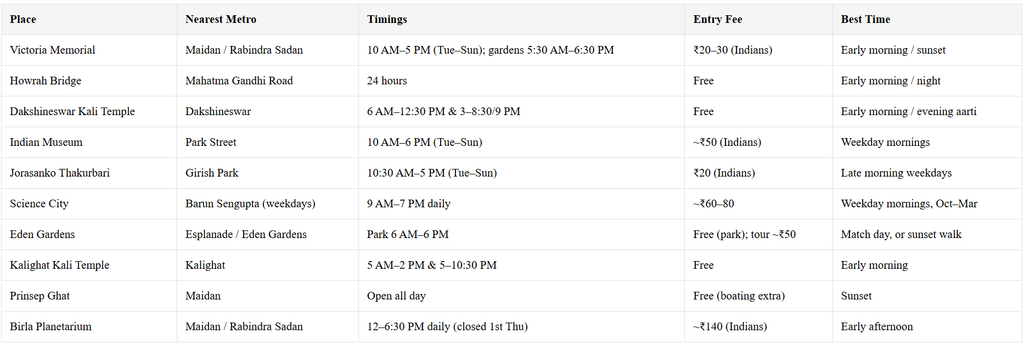
Quick Reference Table
Frequently Asked Questions
What is the best time of year to visit Kolkata?
October to March is ideal, when the weather is cool and dry enough for long days of walking. If you can time your trip around Durga Puja in October, you will see the city at its most alive, though it is also its most crowded.
Can I cover all 10 of these places in a single day?
Not comfortably. A realistic plan groups them by area: Victoria Memorial, Birla Planetarium, Eden Gardens, and Prinsep Ghat on one south-central day, Indian Museum and Park Street nearby, Jorasanko Thakurbari and Howrah Bridge together in North Kolkata, and Dakshineswar and Kalighat as their own dedicated half-days given the travel involved. Three to four days lets you see everything without rushing.
Is the Kolkata Metro the easiest way to get around?
Yes. All ten places on this list sit within a short walk or auto ride of a metro station, and fares are inexpensive compared to cabs. Science City is the one place to plan around, since its Orange Line station currently runs on weekdays only.
Which of these places are completely free to enter?
Howrah Bridge, Dakshineswar Kali Temple, Kalighat Kali Temple, Prinsep Ghat, and Eden Gardens’ park area do not charge any entry fee. Victoria Memorial, Indian Museum, Jorasanko Thakurbari, Science City, and Birla Planetarium charge a modest ticket.
Do any of these places charge extra for photography?
Yes, a few do. Photography is banned inside the Victoria Memorial galleries and the Kalighat temple sanctum, and Jorasanko Thakurbari charges a separate photography fee. Outdoor spaces and exteriors are generally fine to photograph everywhere on this list.
What should a first-time visitor prioritise if short on time?
If you only have one day, pair Victoria Memorial in the morning with Indian Museum, then head to Prinsep Ghat for enjoying the sunset, and finish the evening by taking a ferry across the Hoogly river watching the Howrah Bridge lighten up. It is a compact route that still captures the heritage, culture, and river-life sides of the city.
Fall in love with more of Kolkata
This is just the beginning. Explore more heritage walks, hidden places and more on Explore Kolkata.