

The best sweet shops in Kolkata will teach you more about Bengali desserts in one afternoon than a week of reading. This guide covers 18 shops across North, Central and South Kolkata plus three worth a day trip, with each shop’s history, what it is actually famous for, what to order, 2026 prices, the nearest metro station, opening hours and the sell-out window, and one insider tip. You will also get the full rosogolla origin story, a month-by-month festive sweet calendar, a one-day mishti crawl itinerary and the practical stuff nobody publishes: how to tell a good shop from a tired one, and how to carry sweets home without ruining them.
Researched and written by The Kolkataholic. We are based in Kolkata and these shops are on our own weekly route. Historical claims are sourced to published records and, where the record genuinely conflicts, we say so instead of picking a convenient date. Last verified: September 2026.
Why is Bengal so famous for sweets?
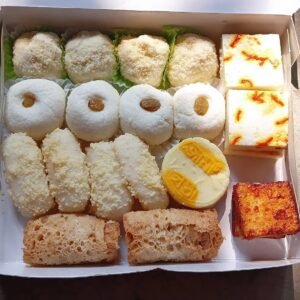
Bengal is famous for sweets because of one ingredient that most of India historically avoided: chhana, the soft curd left when milk is deliberately split. Almost every other Indian sweet tradition is built on khoya, reduced milk cooked down for hours. Bengal built its tradition on fresh, unpressed chhana instead, and chhana behaves completely differently. It can be kneaded, moulded, filled and boiled. That single technical difference is why a Bengali sweet is light, moist and fragile while a North Indian barfi is dense and keeps for a week.
To know about the best kolkata desserts, CLICK HERE.
The chhana revolution and the Portuguese connection
Deliberately curdling milk was considered inauspicious in orthodox Hindu practice, so for centuries Bengali sweets were made from rice, coconut, sesame and date palm jaggery: moa, naru, pithe, patishapta. The widely accepted account credits Portuguese settlers, who had a trading post at Bandel in Hooghly from the 16th century, with normalising deliberate curdling in Bengal. They were making cheese, and Bandel cheese survives to this day as evidence. Over the following two centuries the taboo softened, local moiras adopted chhana, and by the early 1800s the chhana sandesh had become the signature sweet of Bengal.
Milk, rivers and the Bengal dairy belt
Technique alone is not enough. You need a lot of very fresh milk, because roughly four to five litres go into a kilogram of chhana. The alluvial plains of Nadia, Murshidabad, Burdwan and Hooghly, fed by the Ganga and its distributaries, gave Bengal exactly that: grazing land, cattle, and river routes that brought milk into Calcutta daily. Most heritage sweet shops in Kolkata still work on the same logic, making in small morning batches from that day’s milk rather than holding stock.
The moira: how sweet-making became a hereditary craft
The moira is the traditional Bengali confectioner, and the role was hereditary. Recipes, the exact temperature at which sugar is folded into chhana, the feel of correctly kneaded chhana, all of it passed down within families rather than through any written record. This is why the shops in this guide are still run by the fourth, fifth and sixth generation of the same family, and why a recipe can be genuinely unavailable anywhere else. It is also why the word carried social weight: when Nabin Chandra Das opened his shop, his own prosperous family reportedly used “moira” as an insult. Today it is a title of respect.
Colonial sugar, babu culture and the rise of the mishti dokan (sweet shop)
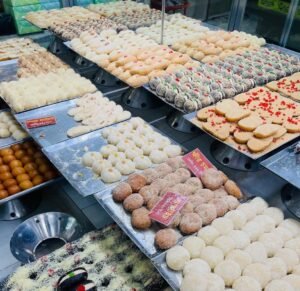
Three 19th century forces turned a craft into an industry. Cheap colonial sugar made large-scale production viable. The new Bengali bhadralok and babu class of Calcutta used lavish sweet distribution to display status at weddings, shraddha ceremonies and Durga Puja. And the Bijoya custom of visiting every relative’s home after Dashami, sweet box in hand, created enormous, predictable, city-wide demand. The mishti dokan became a neighbourhood institution somewhere between a bakery, a club and a landmark. It still is.
Why is Kolkata called the”dessert capital of India“?
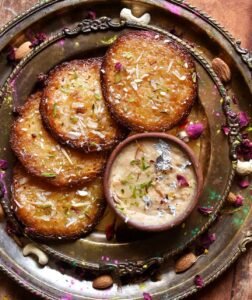
Other Indian cities have great sweets. Kolkata has a sweet culture, and the difference is measurable in four ways: the number of sweets actually invented here, the daily rather than occasional consumption, the survival of pre-1900 shops still under family ownership, and the seasonal ingredient calendar that changes the menu four times a year. Also know why Kolkata is called “The Cultural Capital Of India”: CLICK HERE.
| City | Built on | Signature | Eaten |
|---|---|---|---|
| Kolkata | Fresh chhana, date palm jaggery | Sandesh, rosogolla, mishti doi | Daily, after most meals |
| Mathura and Agra | Khoya, ghee | Peda, petha | Festive, pilgrimage |
| Mysore | Gram flour, ghee | Mysore pak | Festive |
| Bikaner | Milk solids, dry fruit | Rasgulla, ghevar, barfi | Festive, gifting |
The tell is the last column. In Kolkata, mishti is not a celebration food. A household buys two hundred grams on the way home on an ordinary Tuesday, and that daily turnover is exactly what keeps the quality at the best sweet shops in Kolkata high: nothing sits in the tray long enough to go stale.
Who invented the Rosogolla?
The Bengal vs Odisha debate, settled !
Short answer: the spongy white rosogolla sold across Kolkata today was created by Nabin Chandra Das at his Bagbazar shop in the 1860s. Odisha has a separate and much older tradition of rasagola offered at the Jagannath Temple in Puri. Both claims are now legally recognised: West Bengal holds a GI tag for Banglar Rosogolla, granted in November 2017, and Odisha holds one for Odisha Rasagola, granted in July 2019. Neither state owns the word itself.
The Nabin Chandra Das story
Nabin Chandra Das started out working for a confectioner family on Chitpur Road, left after being humiliated, and opened his own shop as a teenager at Jorasanko before moving to Bagbazar. His innovation was not chhana, which Bengal already used, but the problem of boiling a chhana ball in syrup without it disintegrating. His solution, arrived at through repeated failure, produced a sweet that was spongy, white, and could absorb syrup while holding its shape. Published dates for the breakthrough vary between 1864, 1866 and 1868 depending on the source, and no contemporaneous document settles it. What is not disputed is that his shop made the spongy rosogolla a Calcutta phenomenon.
His son Krishna Chandra Das extended the legacy twice over: he created rossomalai, and in 1930 he pioneered canning the rosogolla, which is the reason the sweet travelled out of Bengal at all. K.C. Das Grandsons still trades on that lineage today.
Odisha’s claim: Pahala, Puri and Niladri Bije
Odisha’s case rests on ritual rather than commerce. Rasagola is offered at the Jagannath Temple during Niladri Bije, the ceremony marking Jagannath’s return after the Rath Yatra, when the deity offers the sweet to Lakshmi to pacify her. Temple records, manuscripts and oral testimony were submitted to trace the practice back several centuries. The village of Pahala near Bhubaneswar has been the production centre. Odisha’s rasagola is a different object: softer, browner from caramelised syrup, less chewy, and it collapses on the tongue rather than springing back.
What the GI tags actually decided, and what most articles get wrong
This is the part that gets misreported constantly. The Geographical Indications Registry did not rule that one state invented the sweet. It granted two separate protections for two distinguishable regional products, and it treated the generic word as free for anyone to use. In practice that means:
- Anyone in India may make and sell something called a rasgulla or rosogolla.
- Only authorised users in West Bengal may label a product Banglar Rosogolla.
- Only authorised users in Odisha may label a product Odisha Rasagola.
- Bengal did not “win” and Odisha did not “lose”. Both won the only thing a GI can give: protection of a named regional variant.
| Banglar Rosogolla | Odisha Rasagola | |
|---|---|---|
| GI granted | November 2017 | July 2019 |
| Colour | White | Off-white to light brown |
| Texture | Spongy, springs back | Soft, melts quickly |
| Syrup | Clear, light | Slightly caramelised |
| Roots | 19th century commercial innovation | Temple offering tradition |
Rosogolla Dibas is observed in West Bengal on 14 November, marking the GI announcement. If you are in the city that week, the heritage counters run special batches and the queues are worth planning around.
A Bengali sweet glossary: 15 words worth knowing
Learn these and you can order properly instead of pointing at a tray.
- Chhana: fresh, unpressed curdled milk solids. The base of almost everything here.
- Moira: the traditional sweet maker.
- Mishti: sweet. Mishti dokan: sweet shop.
- Sandesh: chhana kneaded with sugar or jaggery and shaped. The aristocrat of Bengali sweets.
- Kara pak: sandesh cooked longer, firmer, keeps three to five days. The one to buy if you are travelling.
- Norom pak: sandesh cooked briefly, soft and moist, lasts about a day. The one to eat standing at the counter.
- Kacha golla: barely cooked chhana, almost raw, intensely milky. Extremely perishable.
- Nolen gur: fresh liquid date palm jaggery, tapped in winter only. The single best reason to visit Kolkata in December.
- Patali gur: the same jaggery set into hard cakes.
- Jolbhora: “water filled”. A sandesh shell with a liquid gur or syrup core that bursts in the mouth.
- Rosogolla: boiled chhana ball in light syrup.
- Pantua: the fried cousin. Darker, denser, richer.
- Ledikeni: an elongated fried pantua, Kolkata’s own, named after Lady Canning.
- Mishti doi: sweetened, slow-set yoghurt, traditionally in an earthen pot. Laal doi is the darker caramelised version.
- Bhaar: the unglazed earthen pot. It wicks moisture out, which is why doi tastes better in it.
Sweet shops in North Kolkata: the heritage belt
North Kolkata is where the tradition was built, and the oldest surviving sweet shops in Kolkata are concentrated in a walkable band from Bagbazar down to College Street. If you only have half a day, spend it here.
1. Nabin Chandra Das, Shobhabazar
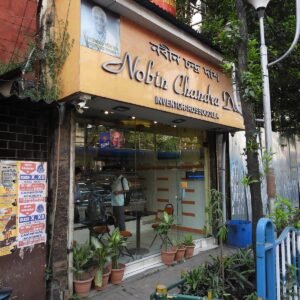
Founded: 1860s. Famous for: being the birthplace of the spongy white rosogolla.
The story: This is the shop, or the direct descendant of the shop, where the modern rosogolla was worked out. Going here is a pilgrimage as much as a purchase, and the family has kept the recipe deliberately plain. If you have only ever eaten a canned or chain rosogolla, the difference in the syrup, which is far lighter than you expect, is the whole point.
Order: Rosogolla, obviously. Then rossomalai.
Price band: Rs 15 to Rs 30 per piece.
Nearest metro: Shobhabazar Sutanuti.
Insider tip: Eat one at the counter before buying a box. A fresh rosogolla is best within a few hours, and this is a sweet that genuinely degrades by evening.
2. Girish Chandra Dey and Nakur Chandra Nandy, Hedua
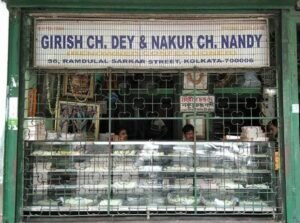
Founded: 1844. Famous for: sandesh, and only sandesh, done better than anyone.
The story: Girish Chandra Dey made a decision that defined the shop: he would make sandesh and no syrup sweets at all. His son-in-law Nakur Chandra Nandy joined the business and the joint name stuck. The Nandy family is now in its fifth generation. The shop on Ramdulal Sarkar Street near Hedua Park is small, chaotic, cash-first and has no seating, and there is a permanent queue.
Order: Kacha golla, jolbhora sandesh, kheer kadam, chocolate malai roll, and in winter the nolen gur sandesh, which is the best version in the city.
Price band: Rs 20 to Rs 50 per piece.
Nearest metro: Girish Park (Blue Line), then about 10 minutes.
Insider tip: Go before 11 am. The nolen gur items sell out first in winter, often within the first two hours, and there is no restock.
3. Chittaranjan Mistanna Bhandar, Shobhabazar
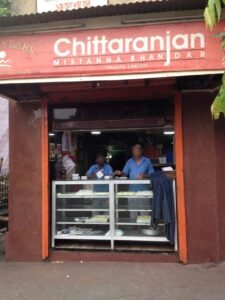
Founded: early 20th century. Famous for: kancha golla and mishti doi.
The story: A textbook North Kolkata para shop near Lal Mandir on Shobhabazar Street, with a century of neighbourhood loyalty behind it and almost no interest in marketing itself. It appears on most serious lists precisely because it has never tried to.
Order: Kancha golla, roshbhora, mishti doi, madhuparka.
Price band: Rs 15 to Rs 40 per piece.
Nearest metro: Shobhabazar Sutanuti (Blue Line), a short walk.
Insider tip: Pair this with the Shobhabazar Rajbari heritage walk. The two are minutes apart and it is the most efficient North Kolkata morning you can plan.
4. Putiram, College Street
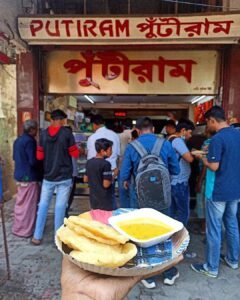
Founded: 19th century. Famous for: being a sweet shop that students treat as a canteen.
The story: Putiram sits in the College Street book district and has fed generations of Presidency and Calcutta University students. It is as well known for radhaballabhi and aloor dom as for its sweets, which tells you exactly what kind of place it is: a shop where the sweet course follows the savoury one at the same counter.
Order: Radhaballabhi with aloor dom first, then rosogolla or sandesh. The mishti doi is reliable.
Price band: Rs 15 to Rs 35 per piece. A full snack plate stays under Rs 120.
Nearest metro: Mahatma Gandhi Road or Central (Blue Line).
Insider tip: Treat this as breakfast, not dessert. Arrive between 8 and 10 am, eat standing, then walk the College Street book stalls while they open.
5. Nalin Chandra Das and Sons
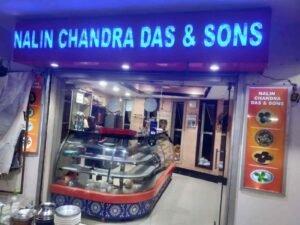
Founded: 1840s, with sources citing both 1841 and 1844. Famous for: chandrapuli and chhanar payesh.
The story: One of the two or three shops with a credible claim to being the oldest surviving sweet business in the city, now five generations deep and operating from more than one address. Its reputation rests on a handful of specialities rather than range.
Order: Keshar chhanar payesh, chandrapuli, chandani kheer.
Price band: Rs 20 to Rs 45 per piece.
Nearest metro: Depends on the branch. Central or Mahatma Gandhi Road for the north outlet, Jatin Das Park for Bhowanipore.
Insider tip: The chhanar payesh is served cold and does not travel. Eat it here.
6. Amrit Sweets, Shyambazar
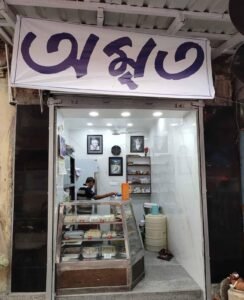
Founded: 1912. Famous for: mishti doi that sells out by lunchtime.
The story: A Shyambazar institution with an unglamorous shopfront and a daily doi batch that disappears within hours of opening. The five-point crossing outside is one of the great North Kolkata landmarks, so the visit doubles as a stop on any heritage route.
Order: Mishti doi in the bhaar. Then whatever the counter recommends that day.
Price band: Rs 60 to Rs 120 per bhaar.
Nearest metro: Shyambazar (Blue Line).
Insider tip: Ring ahead or arrive before noon. “Doi sesh” is the most common sentence you will hear at this counter after 1 pm.
Sweet shops in Central Kolkata
Central Kolkata is where the trade met the colonial city. The Bowbazar cluster in particular is the densest concentration of pre-1900 sweet history anywhere in India.
7. Bhim Chandra Nag, Bowbazar
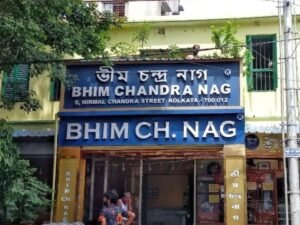
Founded: 1826. Famous for: the ledikeni, ghee malpuas and for being the oldest name on this list.
The story: The shop on Nirmal Chandra Street is small, plain and roughly two centuries old. Its place in history comes from the ledikeni: a fried, elongated chhana sweet created, by the most widely repeated account, in honour of Lady Canning, wife of the Governor-General Lord Canning. The name was Bengali-ised from “Lady Canning” to “ledikeni” and the sweet outlived everyone involved. Bhim Chandra Nag also has a long association with the Tagore household.
Order: Ledikeni and the seasonal ghee malpua.
Price band: Rs 15 to Rs 40 per piece.
Nearest metro: Central (Blue Line), roughly 5 minutes on foot.
Insider tip: Do not expect a heritage experience from the interior. The shop looks like any other counter. Everything here is in the product, so buy two ledikeni and eat them on the street.
8. Nabakrishna Guin, Bowbazar
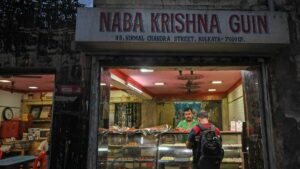
Founded: 19th century. Famous for: cream sandesh and chandan kheer.
The story: The quieter Bowbazar heritage shop, two minutes from Bhim Chandra Nag and usually skipped by visitors who do not know it exists. Locals who care about sandesh often rate it above its famous neighbour.
Order: Cream sandesh, chandan kheer, seasonal gur sandesh.
Price band: Rs 20 to Rs 45 per piece.
Nearest metro: Central (Blue Line).
Insider tip: Buy from both Bowbazar shops on the same trip and taste them side by side. It is the single best way to understand what “good sandesh” actually means.
9. K.C. Das, Esplanade
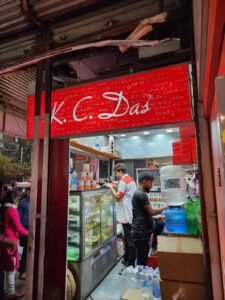
Founded: the family business descends from Nabin Chandra Das; K.C. Das Grandsons was formally constituted in 1956. Famous for: rossomalai and the canned rosogolla.
The story: Krishna Chandra Das, Nabin Chandra’s son, did two things that changed Indian confectionery. He created rossomalai, and in 1930 he worked out how to can a rosogolla so it could survive a journey. Every tin of rosogolla sold anywhere in the world descends from that decision. The Esplanade outlet is the most convenient heritage stop in the city centre.
Order: Rossomalai, rosogolla, and a tin to take home.
Price band: Rs 20 to Rs 60 per piece. Tins from roughly Rs 250.
Nearest metro: Esplanade (Blue and Green Lines).
Insider tip: This is the one shop on the list where the packaged product is genuinely worth buying. The tins are the only Kolkata sweet that reliably survives a long flight. This is one of the best sweet shops in Kolkata that you can find. So, before you go there, read the history of the man behind this shop in more details on Wikipedia, to understand the real heritage of this place.
10. Jugal’s, Park Circus
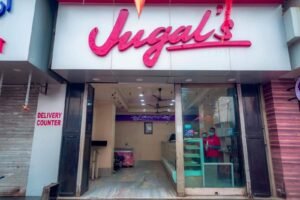
Founded: 1923. Famous for: laal doi, the darker caramelised mishti doi.
The story: A century-old name that has modernised without losing the core product. The doi is set slowly over many hours, which is what gives it the colour and the depth that a quick-set commercial doi never has.
Order: Laal doi first. Then chomchom, and the flavoured sandesh range if you want something less traditional.
Price band: Rs 25 to Rs 70 per piece.
Nearest metro: Park Street (Blue Line), then a short ride.
Insider tip: This is the most practical stop if you are staying around Park Street and do not want to cross the city. Quality is high and the outlets keep longer hours than the heritage shops.
Sweet shops in South Kolkata
The south is where the tradition got ambitious. These shops experiment, package properly and keep later hours, which makes them the easiest entry point for a first-time visitor. For the neighbourhoods themselves, see our South Kolkata area list.
11. Balaram Mullick and Radharaman Mullick, Bhowanipore
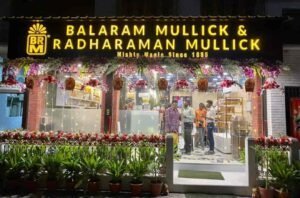
Founded: 1885. Famous for: baked rosogolla and jolbhora sandesh.
The story: The most inventive of the heritage houses. It kept the classics intact while creating genuinely new sweets, and the baked rosogolla, a rosogolla finished in an oven with a browned top, has been copied across the country. The Paddapukur Road shop is the one to visit.
Order: Baked rosogolla, jolbhora sandesh, mango sandesh in summer, nolen gur range in winter, and the chocolate sandesh if you have a child with you.
Price band: Rs 30 to Rs 90 per piece. Premium boxes run higher.
Nearest metro: Jatin Das Park or Netaji Bhavan (Blue Line).
Insider tip: Baked rosogolla is served warm and is a different sweet cold. Ask for it fresh from the oven and eat it there.
12. Mithai, Ballygunge
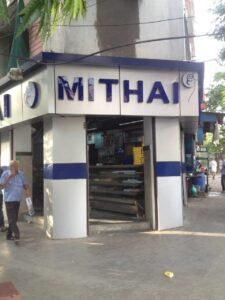
Founded: modern era. Famous for: traditional recipes with reliable presentation and packaging.
The story: The bridge between the heritage counters and contemporary Kolkata. Clean, air conditioned, consistent, and the best option if you are buying a gift box rather than eating on the spot.
Order: Nolen gur sandesh in winter, kheer kadam, the assorted sandesh box.
Price band: Rs 30 to Rs 100 per piece.
Nearest metro: Rabindra Sarobar (Blue Line), then a short ride.
Insider tip: This is where to buy the box you are carrying to someone else’s house. Heritage shops sell better sweets; this sells a better box.
13. Hindusthan Sweets, Jadavpur
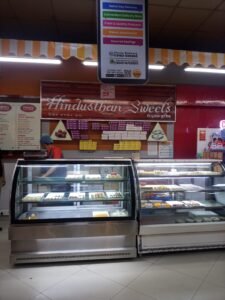
Founded: mid 20th century. Famous for: everyday sandesh and mishti doi at neighbourhood prices.
The story: Multiple outlets across the south, and the shop many South Kolkata households actually use rather than admire. That is its value here: it shows you what ordinary daily mishti consumption looks like.
Order: Gur sandesh, mishti doi, rosogolla, kalojam.
Price band: Rs 15 to Rs 40 per piece.
Nearest metro: Rabindra Sarobar (Blue Line).
Insider tip: Combine with a Lake Market or Gariahat trip. It is on the same stretch and the prices are the most honest on this list.
14. Jalajoga, Hatibagan
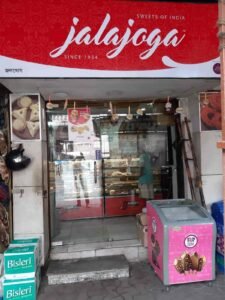
Founded: early 20th century. Famous for: pure ghee sweets and reliable travel-friendly packing.
The story: A century old name known for using ghee rather than substitutes, which matters for the fried sweets. Consistency across its various outlets is its strength.
Order: Pantua, kalojam, kaju barfi, dry sandesh for travelling.
Price band: Rs 20 to Rs 60 per piece.
Nearest metro: Shyambazar. After reaching Shyambazar Metro station, take an auto towards Hatibagan Market where the shop lies.
Insider tip: If you need sweets that will survive 48 hours in a bag, buy the dry, firm kara pak items here rather than anything in syrup.
15. Ganguram, Park Street
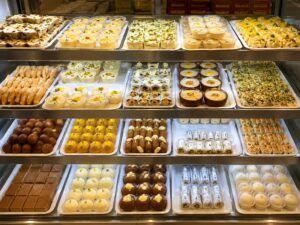
Founded: late 19th century. Famous for: rajbhog and the North Indian crossover range.
The story: The shop that proves Kolkata’s sweet culture was never purely Bengali. Ganguram brought a Uttar Pradesh sweet-making tradition into Calcutta and built a hybrid menu that the city adopted completely.
Order: Rajbhog, kaju barfi, malai chom chom.
Price band: Rs 25 to Rs 80 per piece.
Nearest metro: Park Street.
Insider tip: Order the rajbhog rather than the rosogolla here. The saffron and dry-fruit filling is the thing this house does better than the chhana purists.
Three sweet shops worth a day trip
16. Felu Modak, Rishra
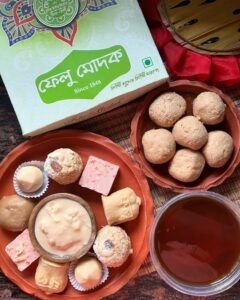
About an hour north of Kolkata in Hooghly, and a genuine pilgrimage for Bengali sweet obsessives. Operating from 1848, it is famous for its monda and its sandesh, made in small quantities with a recipe the family has not diluted. Reach it by local train from Howrah to Rishra. Go in the morning; it sells out.
17. Joynagarer Moa, Joynagar
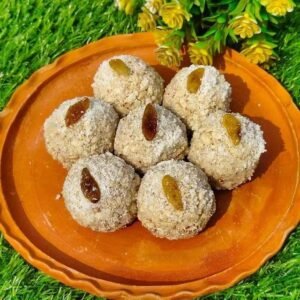
Bengal’s GI Tagged Winter Wonder. Not a shop but a place and a season. Joynagarer Moa is a winter-only sweet made from kanakchur khoi, a specific aromatic puffed rice, bound with fresh nolen gur (date palm jaggery) and studded with nuts. It carries its own GI protection, and it is available roughly mid-December to February. Joynagar is about 50 km south, reachable by train from Sealdah South. Buy from a named shop in Bahru or Joynagar itself, because the “Joynagarer moa” sold on Kolkata streets in December is frequently made elsewhere with ordinary khoi.
18. Shaktigarh Langcha, Purba Bardhaman
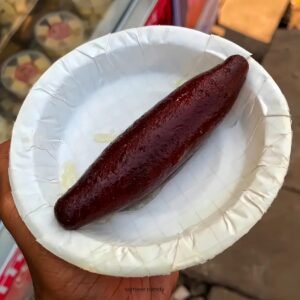
Millions of travelers on the National Highway 19 (NH-19) stop to feast on this sweet. The langcha strip on the Durgapur Expressway is a road-trip institution: dozens of shops selling one sweet, Langcha. The famous Shaktigarer Langcha is an iconic cylindrical, deep-fried Bengali sweet soaked in thick sugar syrup. If you are driving to Santiniketan or Durgapur, this stop is unavoidable and should be. Buy hot, eat immediately, and do not buy in bulk since langcha does not keep.
Fun Fact: Langcha’s geographical history traces back to a matrimonial alliance between the Burdwan and Krishnanagar royal families. According to accounts detailed in writer Narayan Sanyal’s historical novel Roopmanjari, a pregnant princess belonging to the Krishnanagar royal household lost her appetite completely. When medical intervention failed, she recalled craving a specific dark, syrup-drenched elongated sweet she had once eaten. Unable to remember the sweet’s name, she simply pointed out that the one who made it walked with a limp – “Langcha”. The limp-walking artisan was immediately summoned by the King, gifted land in Burdwan, and settled there to exclusively cook for the princess.
Which sweets were invented in Kolkata?
| Sweet | Credited to | Roughly when | Best version today |
|---|---|---|---|
| Spongy rosogolla | Nabin Chandra Das | 1860s | Nabin Chandra Das, Bagbazar |
| Ledikeni | Bhim Chandra Nag | 1850s to 1860s | Bhim Chandra Nag, Bowbazar |
| Rossomalai | Krishna Chandra Das | Early 20th century | K.C. Das, Esplanade |
| Canned rosogolla | Krishna Chandra Das | 1930 | K.C. Das tins |
| Baked rosogolla | Balaram Mullick and Radharaman Mullick | Modern | Balaram Mullick, Bhowanipore |
| Jolbhora sandesh | Surjya Kumar Modak, Chandannagar | 19th century | Nakur, or Balaram Mullick |
Best sweets to try, based on what you already like
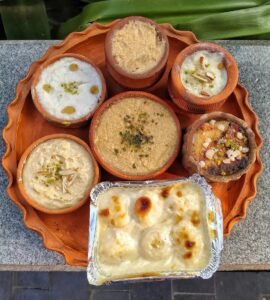
- If you like cheesecake: start with kacha golla or norom pak sandesh. Same milky, barely-sweet register.
- If you dislike very sweet food: sandesh, not rosogolla. Bengali sandesh is far less sweet than almost any other Indian sweet.
- If you like caramel or toffee: nolen gur anything, in winter. It is closer to smoky caramel than to sugar.
- If you like doughnuts and fried things: pantua, ledikeni, langcha.
- If you like yoghurt or skyr: mishti doi, and then laal doi.
- If it is your very first Bengali sweet: one rosogolla, one plain sandesh, one mishti doi, in that order, at any one heritage shop.
- If you are buying a gift: a kara pak sandesh assortment. It looks good and survives the journey.
The one-day sweet crawl: a metro-wise itinerary
The Blue Line runs north to south through almost every shop on this list, which makes a single-day crawl genuinely easy. Do not attempt this by cab. Traffic between Bowbazar and Bagbazar will cost you two hours.
Morning leg: North Kolkata, 8.00 am to 11.30 am
Start at Shyambazar for Amrit’s mishti doi while the batch is fresh. Walk or take a short ride to Shobhabazar for Chittaranjan Mistanna Bhandar. Continue to Bagbazar for Nabin Chandra Das. Finish at Girish Park and walk to Hedua for Girish Chandra Dey and Nakur Chandra Nandy before the nolen gur items run out.
Midday leg: College Street and Bowbazar, 11.30 am to 2.00 pm
Metro to Mahatma Gandhi Road. Putiram for radhaballabhi and aloor dom, which will be the only savoury thing you eat all day and you will need it. Browse the College Street stalls. Walk down to Bowbazar for Bhim Chandra Nag and Nabakrishna Guin back to back.
Afternoon leg: Esplanade, 2.00 pm to 3.30 pm
Metro to Esplanade for K.C. Das. Buy the tins here rather than at the end of the day, then leave them at your hotel if you are staying centrally.
Evening leg: South Kolkata, 4.30 pm onwards
Metro to Jatin Das Park for Balaram Mullick and Radharaman Mullick. Ask for the baked rosogolla warm. Finish on Rashbehari with Hindusthan Sweets, or push on to Ballygunge for Mithai if you are buying boxes.
The 48-hour version
Split it. Day one covers North and Central at a walking pace with a College Street detour. Day two covers South Kolkata plus either Felu Modak at Rishra or, in winter, a Joynagar run.
The two-hour layover version
Esplanade metro. K.C. Das, then a 10 minute ride to Bowbazar for Bhim Chandra Nag. Two shops, two centuries, one tin to carry home.
Rules for the crawl: buy one or two pieces per shop, never a box, until the last stop. Carry cash; several heritage counters still prefer it. Eat the chhana-based sweets before the syrup-based ones, because syrup deadens the palate. And drink water between shops, not tea.
Seasonal and festive sweets: a month-by-month calendar
This is the part that separates a resident from a visitor. The menu at the best sweet shops in Kolkata changes four times a year, and two of those windows are short.
| When | Occasion | What to eat |
|---|---|---|
| Dec to Feb | Nolen gur season | Gur sandesh, jolbhora, gurer rosogolla, gurer payesh |
| Mid January | Poush Parbon | Patishapta, puli pithe, gokul pithe, gurer payesh |
| Dec to Feb | Joynagarer moa season | Moa, from Joynagar or a named shop |
| Jan or Feb | Saraswati Puja | Joda sandesh, kul, batasha |
| Apr to Jun | Summer and Jamai Shashthi | Mango sandesh, aam doi, the ceremonial sweet box |
| Jun or Jul | Rath Yatra | Papad, jilipi, gaja |
| Sep or Oct | Durga Puja and Bijoya | Narkel naru, nimki, assorted sandesh boxes |
| Oct | Lakshmi Puja | Til naru, narkel naru, moa |
| Oct or Nov | Kali Puja and Diwali | Kaju barfi, dry fruit boxes, gift hampers |
| Oct or Nov | Bhai Phonta | The single biggest sweet-buying day in Bengal. Order ahead. |
| 14 Nov | Rosogolla Dibas | Special rosogolla batches at the heritage shops |
The one rule: if you can choose when to visit, come between mid-December and the end of January. Nolen gur is tapped only in winter, it cannot be faked convincingly, and every shop on this list is at its absolute best during that window.
How much do sweets cost in Kolkata? A 2026 budget guide
Kolkata is the cheapest great dessert city in India by a wide margin. These are indicative 2026 ranges; heritage shops price by piece, not weight, and premium and seasonal items sit at the top of each band.
| Item | Typical price |
|---|---|
| Rosogolla, per piece | Rs 15 to Rs 30 |
| Plain sandesh, per piece | Rs 20 to Rs 45 |
| Nolen gur or jolbhora sandesh (winter) | Rs 30 to Rs 70 |
| Premium or fusion sandesh | Rs 50 to Rs 120 |
| Mishti doi, per bhaar | Rs 60 to Rs 120 |
| Sandesh, per kg | Rs 600 to Rs 1,200 |
| Canned rosogolla tin | From about Rs 250 |
| Full one-day crawl, two people | Rs 900 to Rs 1,600 including metro fares |
How to carry Kolkata sweets home ?
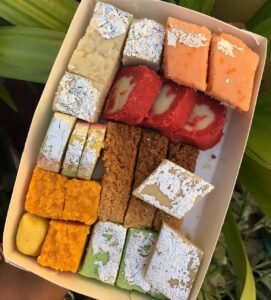
This is the question nobody answers properly, and getting it wrong is how people end up with a leaking bag and a box of collapsed chhana.
- Kara pak sandesh is your best traveller. Firm, low moisture, keeps three to five days unrefrigerated. Ask specifically for “kara pak” or “shukno mishti” (dry sweets).
- Norom pak sandesh and kacha golla last about a day, two if refrigerated. Do not plan a journey around them.
- Rosogolla, pantua and anything in syrup will leak. Only carry these in a sealed tin or a properly vacuum-packed container, never a standard sweet box.
- Canned rosogolla keeps for months and is the only genuinely airline-proof option. Put tins in checked baggage: syrup counts as a liquid at cabin security.
- Mishti doi in an earthen bhaar does not travel. The pot cracks and the doi separates. Eat it in the city.
- Nolen gur travels very well in winter. Buy it in a sealed tin or jar and it will outlast every other purchase.
- Joynagarer moa keeps three to five days at most, and less in a warm bag.
- Practical trick: tell the counter you are flying or taking a train. Most heritage sweet shops in kolkata will pack differently, use a stiffer box and skip the syrup items without being asked twice.
How to tell a great mishti shop from a tired one ?
- Go early. Almost everything here is made in a morning batch across all sweet shops in Kolkata. A sweet bought at 10 am and the same sweet bought at 7 pm are not the same product.
- Watch the turnover. A queue is a quality signal in this trade, because it means nothing sits.
- Look at the chhana. Good sandesh looks moist and slightly grainy at the edge. If it looks glossy, rubbery or uniformly smooth, it has been over-worked or over-held.
- Distrust deep syrup trays. Rosogolla sitting in heavy syrup all day has gone spongy in the wrong way and tastes mostly of sugar.
- Ask “kokhon toiri hoyeche?” That is “when was this made”. Asking it in Bengali changes the answer you get.
- Buy at the original branch. Several names on this list of the sweet shops in kolkata have family splits and multiple outlets of varying quality. The founding address is almost always the best one.
- Judge by the plain sweet. Anyone can make a chocolate sandesh taste of chocolate. Order the plain sandesh or plain rosogolla to find out whether a shop can actually cook.
Tourist traps and common mistakes
- Buying at railway stations and the airport. Convenient, expensive, and never the morning batch.
- Assuming a big glossy chain is a heritage shop. Several modern chains use deliberately old-sounding names. Check the founding year, not the shopfront.
- The “original branch” problem. More than one shop in this city advertises itself as the real one. Where a founding address is known, go there.
- Buying a full kilo at your first stop. You will find something better at stop four and you will be carrying a kilo of stop one.
- Eating syrup sweets first. Start with sandesh. Once you have had heavy syrup, the subtler sweets taste of nothing.
- Visiting in May and expecting nolen gur. If a shop offers “nolen gur sandesh” in summer, it is flavouring, not fresh jaggery.
- Showing up at 8 pm. Many of the heritage counters have sold their best items and some close early. For enjoying freshly made sweets at the sweet shops in kolkata, try visiting earlier.
Sweet shops near Kolkata’s main tourist spots
These are some of the popular places for finding out sweet shops in kolkata near the tourist spots:
- Victoria Memorial and Park Street: K.C. Das at Esplanade is the closest heritage option, with Jugal’s a short ride east.
- Kalighat Temple: the sweet shops along Sadananda Road, then Balaram Mullick at Bhowanipore, about 10 minutes away.
- Dakshineswar and Belur Math: take the Blue Line back south and stop at Shyambazar for Amrit, then Shobhabazar.
- College Street and the Indian Museum: Putiram, then Bowbazar for Bhim Chandra Nag and Nabakrishna Guin.
- Howrah Station: skip the platform stalls. Cross to Bowbazar, which is a short ride away, or wait for the Shaktigarh langcha stop if you are driving north.
Frequently asked questions about sweet shops in Kolkata
Which is the oldest sweet shop in Kolkata?
Bhim Chandra Nag in Bowbazar, founded in 1826, is the oldest continuously operating sweet shop in Kolkata by the most widely cited record. Nalin Chandra Das and Sons, dated to the early 1840s, and Girish Chandra Dey and Nakur Chandra Nandy, founded in 1844, follow closely.
Who invented the rosogolla?
Nabin Chandra Das, at his shop in the Bagbazar area of Kolkata in the 1860s, created the spongy white rosogolla eaten across India today. Published dates vary between 1864 and 1868. Odisha separately traces a rasagola tradition to the Jagannath Temple at Puri going back centuries.
Is rosogolla from Bengal or Odisha?
Both. West Bengal received a GI tag for Banglar Rosogolla in November 2017 and Odisha received one for Odisha Rasagola in July 2019. The two are recognised as distinct regional products, and the generic word rosogolla belongs to neither state exclusively.
What is the most famous sweet in Kolkata?
Rosogolla is the most famous, but sandesh is what Kolkata takes most seriously and mishti doi is what locals eat most often. A first-time visitor must try all three at the sweet shops in kolkata given above.
What is the best time to visit Kolkata for sweets?
Mid-December to the end of January. This is nolen gur season, when fresh date palm jaggery is available and every heritage shop runs its best menu of the year. Joynagarer moa is also available only in this window. Sweet shops in Kolkata prepares the best desserts out of fresh nolen gur.
Can I carry Kolkata sweets on a flight?
Yes. Dry, firm kara pak sandesh travels well for three to five days. Anything in syrup should go in a sealed tin in checked baggage, since syrup is treated as a liquid at cabin security. Canned rosogolla is the most reliable option and keeps for months.
Which sweet shop in Kolkata has the best sandesh?
Girish Chandra Dey and Nakur Chandra Nandy in Hedua is the most widely agreed answer, particularly for kacha golla and winter nolen gur sandesh. Nabakrishna Guin in Bowbazar and Balaram Mullick in Bhowanipore are the strongest alternatives.
Are there sugar-free sweets in Kolkata?
Yes. Most larger sweet shops in kolkata, including Balaram Mullick, Mithai and Jalajoga, carry a sugar-free sandesh and sometimes a sugar-free rosogolla, usually made with a sweetener rather than jaggery. Ask for “sugar-free mishti” at the counter. The small heritage counters generally do not stock them, so call ahead.
How many sweet shops are there in Kolkata?
There is no official register of all the sweet shops in kolkata, and estimates run from several thousand into the tens of thousands once neighbourhood counters are included. Nearly every para in the city has at least one mishti dokan, which is precisely why the trade has stayed competitive for two centuries.
Do sweet shops in Kolkata deliver outside the city?
Several of the larger names ship across India, and K.C. Das tins are widely available online. The small heritage shops generally do not ship, because their products are built to be eaten the same day.
Final word
The sweet shops in Kolkata on this list are not museums. They are working counters that sell out by lunchtime, take cash, and make the same things they made when Lord Canning was Governor-General. Treat them that way: go early, buy two pieces at a time, eat standing up, and come in winter if you possibly can as that’s the time when sweet shops in kolkata delivers their best items. Start with the one-day crawl above, order the plain sandesh before the fancy one, and ask when it was made. Do that and you will understand in a single day what makes this the dessert capital of India.
To know about the top 10 desserts to try out in kolkata, CLICK HERE.
Ready to Start Your Kolkata Sweet Crawl?
Follow Kolkata Bites for more food trails of the City of Joy.