
This South Kolkata area list covers the 12 neighbourhoods that actually define the southern half of the city: Bhowanipore, Kalighat, Rashbehari, Ballygunge, Gariahat and Golpark, Alipore, New Alipore, Tollygunge, Jodhpur Park and South City, Jadavpur, Lake Gardens and Rabindra Sarobar, and Behala.
Together they stretch from the Maidan’s southern edge down to Joka, roughly 14 km end to end. South Kolkata is the greener, quieter, more planned half of the city: wide avenues instead of 18th century lanes, colonial bungalows and Art Deco blocks instead of Marwari mansions, and a food culture built on cabins, sweet shops, mishti-doi and the roll.
This guide on south kolkata area list gives you each area’s landmarks, best restaurants and cafes, street food, famous residents, nearest metro station and one insider tip, plus a three day itinerary, hotel advice and a metro cheat sheet. Read it once and you will not need another tab open.
Written and fact-checked by The Kolkataholic. Metro details verified against Metro Railway Kolkata service information for 2026. We live here, walk these lanes and eat at these counters. Last updated: September 2026.
How is South Kolkata organised? Old south vs new south
Before you use the South Kolkata area list below, know that the region grew in two distinct waves, and that single fact explains almost everything about how each neighbourhood feels today.
The old south (roughly 1850 to 1930) grew around temples, ponds and estates: Kalighat around its temple, Bhowanipore around Jagubazar, Ballygunge and Alipore around British and zamindar bungalows. These areas have narrow feeder lanes, para culture, clubs with waiting lists and sweet shops that have been run by the same family for four generations.
The new south (roughly 1950 to 2010) was planned on refugee resettlement land and reclaimed marsh: New Alipore, Lake Gardens, Jodhpur Park, Bansdroni and the Bypass belt. Here you get grid-plan blocks, wider roads, and, later, malls and high-rises. The 2010s and 2020s added a third layer along the E.M. Bypass and the new metro corridors.
So when you hear that South Kolkata is “posh”, it is only half true. Alipore and Ballygunge are genuinely old money. Behala and Jadavpur are working and middle class. That mix is exactly what makes the south worth walking.
South Kolkata area list: 12 neighbourhoods you need to know
The areas in South Kolkata below run roughly north to south, so this doubles as a travel sequence. Each entry follows the same structure: what it is famous for, the best places in South Kolkata within it, food, a famous name, the nearest metro and one tip you will not find on a listicle.
1. Bhowanipore: the gateway to the south
Famous for: Being the first “south” neighbourhood, and the most mixed. Bengali, Gujarati, Marwari, Punjabi and Odia families have shared these lanes for a century, which is why you can eat a kochuri, a dhokla and a paratha within 200 metres. Bhowanipore is the area whose local seat elects the state’s Chief Minister. Mamata Banerjee held that seat for years, but in the 2026 election Suvendu Adhikari (BJP) won it instead, so it’s now his constituency.
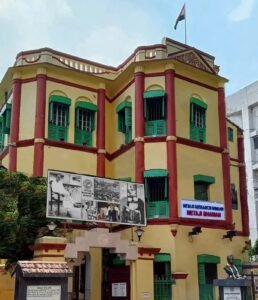
Best places: Netaji Bhavan at 38/2 Elgin Road (the Bose family home, now a museum, and the house Subhas Chandra Bose escaped from in January 1941), Jagubazar for fish and vegetables, Ashutosh Mukherjee Road for Durga Puja pandals, and Elgin Road for shopping. Satyajit Ray lived at 1/1 Bishop Lefroy Road and wrote, drew and composed there. The building still stands; it is a private residence, so admire it from the road.
Eat here: Kewpie’s Kitchen on Elgin Lane serves Bengali home cooking on a thali in what is literally someone’s house. Balwant Singh’s Eating House on Harish Mukherjee Road is the city’s great late night institution: paratha, bhurji and the famous doodh cola, open until the small hours. Balaram Mullick and Radharaman Mullick is the sweet shop of record for baked rosogolla.
Street food: Jagubazar morning kochuri with chholar dal, and the telebhaja stalls on Harish Mukherjee Road at dusk.
Famous personality: Netaji Subhas Chandra Bose, Satyajit Ray – the legendary Indian film director.
Nearest metro: Netaji Bhavan and Jatin Das Park (Blue Line).
Insider tip: Go to Netaji Bhavan on a weekday morning. The staircase and the 1937 Wanderer car are the emotional centre of the house, and on weekends you will be shuffled past both. To know more about such hidden heritage buildings across Kolkata, CLICK HERE.
2. Kalighat: the spiritual heart
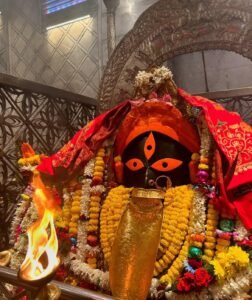
Famous for: Kalighat Kali Temple, one of the 51 Shakti Peethas and the shrine that gave Calcutta its name. The temple is mentioned in 15th-century texts, but the building standing today was put up in 1809 by the Sabarna Roy Choudhury family, who donated a huge plot of land to keep the worship going. Kalighat is where “Kalighat Patachitra” painting was born, a bold, satirical folk-art style from the 1800sthat historians call one of the first truly modern Indian art movements, and it went on to shape later Bengali artists like Jamini Roy.
Best places: The temple itself, the Nakuleswar Bhairav temple behind it, the flower and sindoor lanes of Patuapara, and Nirmal Hriday, Mother Teresa’s Home for the Dying, immediately beside the temple.
Eat here: This is a snack neighbourhood, not a restaurant one. Walk five minutes to Rashbehari for a proper sit-down meal.
Street food: Morning kochuri and jilipi from the stalls on Kalighat Road, and the sweet shops along Sadananda Road for mishti doi in earthen pots.
Famous personality: The Kalighat patuas, whose bold, quick-brushed Kalighat Pat paintings from the 1800s now hang in the Victoria Memorial and the V&A in London. Mother Teresa worked here for decades. Also, just a five-minute walk from the temple will take you to the current residence of the former Chief Minister of West Bengal, Mamata Banerjee.
Nearest metro: Kalighat (Blue Line).
Insider tip: Ignore anyone who approaches you outside the temple offering a “special darshan” or a garland for a donation. Buy your offering from a numbered shop, deposit your shoes at the official counter, and join the ordinary queue. Avoid Tuesdays, Saturdays and Amavasya if you dislike crowds.
3. Rashbehari: the food corridor
Famous for: Being the spine that connects Kalighat to Gariahat. Rashbehari Avenue is where South Kolkata does its daily shopping, and the crossing is one of the densest eating strips in the city. Kabita Bhavan (202 Rash Behari Avenue) was a legendary address in modern and post‑modern Bengali literature, a meeting point for poets and writers.
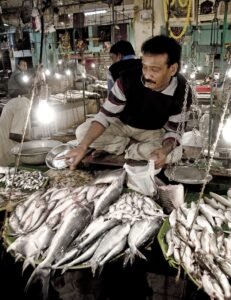
Best places: Lake Market (fish, flowers, fruit, and the best place to watch a Bengali household shop), Lake Mall, Deshapriya Park, famous for a Durga Puja that holds the record for the tallest Durga statue, which once drew such crowds that the police had to shut it, and Triangular Park.
Eat here: Buy a fresh Hilsa(ilish) fish from this market if you want to cook the authentic bengali fish at home. The stretch between Lake Market and Rashbehari crossing has everything from old sweet shops to new cafes. Bhojohori Manna’s Ekdalia branch is a short hop east for classic Bengali dishes: kosha mangsho, daab chingri, chital macher muitha.
Street food: Egg rolls at the Rashbehari crossing, phuchka near Deshapriya Park, and Lake Market’s morning singara.
Famous personality: Sir Rash Behari Ghosh, a prominent Congress leader, social worker and lawyer.
Nearest metro: Kalighat or Rabindra Sarobar (Blue Line).
Insider tip: Lake Market is at its best between 7 and 9 am. By 11 am the good hilsa is gone and the theatre is over.
4. Ballygunge: old money, books and film
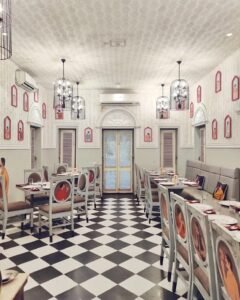
Famous for: Ballygunge is an upmarket South Kolkata neighbourhood that grew around a sand market (“bali” = sand, “gunge” = market/village) and later became a British-era elite suburb with garden houses, clubs, and rifle ranges. Being the address, Ballygunge is where Kolkata’s professional and cultural elite settled: doctors, barristers, publishers, film-makers. Ballygunge Phari, Ekdalia Road and the Circus Avenue side streets are lined with 1930s Art Deco blocks.
Best places: Ekdalia Evergreen Club and Ballygunge Cultural Association, two of the city’s most-visited Durga Pujas, Quest Mall for high-end shopping, Gurusaday Museum for Bengali folk art, and the tree-lined stretch of Bishop Lefroy Road.
Eat here: 6 Ballygunge Place is the benchmark for Bengali restaurant dining in an old house setting. The Ballygunge and Hindustan Park pockets are also the city’s densest cafe cluster.
Street food: Gupta Brothers in Hindustan Park for kochuri and radhaballabhi, a queue-forming institution since the 1940s.
Famous personality: Suchitra Sen, superstar actress; Ritwik Ghatak – Iconic filmmaker; also a BGHS (Ballygunge Government High School) alumnus; R.D. Burman – Iconic music composer; studied at BGHS
Nearest metro: Kalighat or Rabindra Sarobar (Blue Line). Ballygunge railway station serves the Sealdah South line.
Insider tip: Walk Hindustan Park on a winter evening. It is four or five narrow lanes of cafes, bookshops and para adda, and it is the closest South Kolkata gets to a European quarter.
5. Gariahat and Golpark: the shopping hub
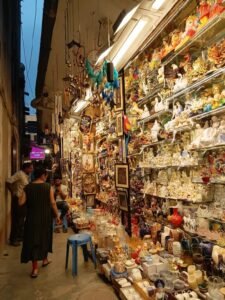
Famous for: Gariahat Market and the pavement saree trade. If you want a Dhakai jamdani, a tant, a Baluchari or a winter shawl, this is where the city buys it, and where bargaining is expected. This is neighbourhood that grew from a village market into one of the city’s most iconic shopping, food, and cultural zones. The informal Gariahat Chess Club under the Gariahat flyover, where locals gather every evening to play chess on low tables amid traffic and hawkers. Started decades ago and later supported by Kolkata Police as a designated chess corner, it’s a unique street scene where everyday chaos meets intense, quiet games.
Best places: Gariahat Market and Traders Assembly, Dakshinapan Shopping Centre near Dhakuria for state emporium handlooms at fixed prices, and the Ramakrishna Mission Institute of Culture at Golpark, which has one of the best libraries and lecture halls in eastern India.
Eat here: Dolly’s The Tea Shop inside Dakshinapan is a Kolkata legend, opened by a Camellia-gold-medal-winning tea taster; order the cold chocolate tea. The Gariahat crossing has branches of most major Bengali restaurant chains.
Street food: The Gariahat footpath rolls and the fish fry counters near the market. Street stalls for ghugni, chow mein, shingara, rolls, and chaat is flooded in this iconic area.
Famous personality: Golpark’s Institute of Culture keeps Swami Vivekananda’s intellectual legacy alive; its Vivekananda Hall hosts free public lectures.
Nearest metro: Rabindra Sarobar (Blue Line), then a short ride east. Gariahat is one of the few major South Kolkata areas still without its own station.
Insider tip: Inside Dakshinapan Shopping Complex, prices are fixed and the quality is government-certified, so use Dakshinapan to learn what a fabric should cost, then bargain outside at the main market. You can try playing a game of chess with the locals under the Garriahat bridge to feel the real adda culture of Kolkata
6. Alipore: the colonial quarter
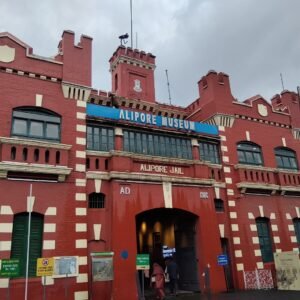
Famous for: The greenest, quietest and most poshest neighbourhood in Kolkata. Alipore is the old British administrative and residential enclave, and it still holds the judges’ bungalows, the zoo and the National Library. Alipore was the epicenter of a historical trial during the Indian independence movement. Following a bombing , British police raided a revolutionary hideout and arrested prominent figures like Sri Aurobindo Ghosh and Barindra Kumar Ghosh, holding them in Alipore Jail.
Best places: Alipore Zoological Gardens (1876, India’s oldest formally constituted zoo), the National Library of India in the Belvedere Estate, the Agri-Horticultural Society of India gardens founded in 1820, and the Alipore Jail Museum, where Netaji, Jawaharlal Nehru and Chittaranjan Das were all held.
Eat here: Alipore is hotel-restaurant territory rather than street food territory. Taj Bengal’s restaurants are the marquee option.
Street food: Limited by design. The zoo gate stalls in winter sell jhal muri and cotton candy, and that is about the extent of it.
Famous personality: Sri Aurobindo Ghosh: The philosopher and nationalist was the prime accused in the 1908 Alipore Bomb Case; Warren Hastings, the first Governor-General, is associated with Belvedere House. Netaji’s cell at the Alipore Jail Museum is the more moving stop.
Nearest metro: Majerhat (Purple Line) for the western edge; Jatin Das Park (Blue Line) for the northern edge.
Insider tip: Visit the Agri-Horticultural Society gardens rather than the zoo if you want calm. It is 30 acres, almost empty on weekday mornings, and the annual flower show in January and February is spectacular.
7. New Alipore: planned, quiet, underrated
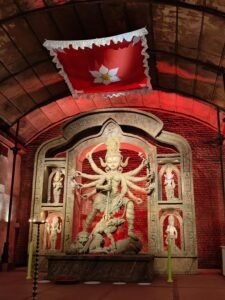
Famous for: A grid of lettered blocks (A through P) laid out as a planned residential colony after Independence. It is the calmest part of the South Kolkata areas list and a favourite of film crews.
Best places: Suruchi Sangha, whose Durga Puja is one of the most awarded in the city and is themed around a different Indian state each year, and the quiet block roads themselves, which are genuinely pleasant to cycle.
Eat here: A strong, low-key neighbourhood restaurant scene along Block A and the Durgapur Bridge side, heavy on Chinese, kebabs and bakeries.
Street food: Evening chowmein and momo carts near the New Alipore market and Sahapur.
Famous personality: New Alipore is better known for what happens here than who lives here: it is one of the most filmed residential neighbourhoods in Bengali cinema.
Nearest metro: Majerhat (Purple Line), which also connects to Majerhat railway station.
Insider tip: During Durga Puja, do Suruchi Sangha early, before 10 am on Saptami or Ashtami. Its queue after dark routinely runs over an hour.
8. Tollygunge: Tollywood and the old club
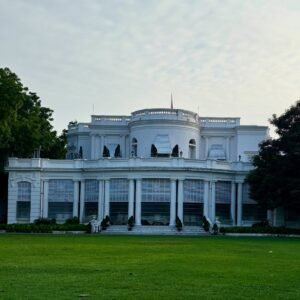
Famous for: Giving the Bengali film industry its name. “Tollywood” is a portmanteau of Tollygunge and Hollywood, coined here in the 1930s and later borrowed by Telugu cinema. While it is best known today as the glamorous center of Bengali cinema and an upscale residential hub, its history stretches back centuries and involves British officers, exiled royals, and dense jungles.
Best places: The Tollygunge Club, an 1895 colonial club set on an old indigo plantation with a golf course in the middle of the city, the studio belt around Technicians’ Studio and NT1, and the Karunamoyee Kali temple.
Eat here: Tollygunge’s own restaurant strip runs along Deshpran Sasmal Road, and Russa Road has old-style cabins serving fish fry, cutlets and chops. For kebabs, tandoori dishes, naan and rich North Indian curries, Rang De Basanti Dhaba- Tollygunge is an option to consider.
Street food: The chop and cutlet cabins near Tollygunge metro, best at around 6 pm when the evening batch comes out of the oil.
Famous personality: Uttam Kumar – The legendary Indian actor, director and producer. The metro station is officially named Mahanayak Uttam Kumar in his honour.
Nearest metro: Mahanayak Uttam Kumar (Blue Line).
Insider tip: The Tollygunge Club is members-only, but non-members can sometimes book a room or a meal through its guest-house arrangement. Enquire in advance rather than turning up at the gate.
9. Jodhpur Park and South City: the modern south
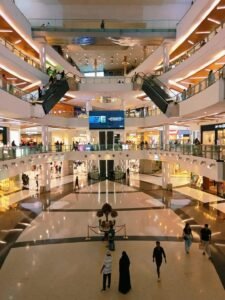
Famous for: South City Mall Kolkata, the largest and busiest mall in the city, and the residential towers beside it. This is where the new south does its weekends.
Best places: South City Mall on Prince Anwar Shah Road (multiplex, food court, most international high-street brands under one roof), the Jodhpur Park Durga Puja, and Lake Mall a short distance north.
Eat here: The South City food court and its restaurant floor cover everything from Bengali to Japanese. The Prince Anwar Shah Road connector outside has a strong independent cafe and dessert cluster.
Street food: The Jadavpur and Jodhpur Park side lanes for rolls and momos after mall hours.
Nearest metro: Rabindra Sarobar or Mahanayak Uttam Kumar (Blue Line), then a 10 minute auto ride.
Insider tip: South City Mall Kolkata is genuinely unbearable on Saturday and Sunday evenings. Go on a weekday before 5 pm, or treat it as a monsoon and peak-summer refuge rather than a destination.
10. Jadavpur: the university town
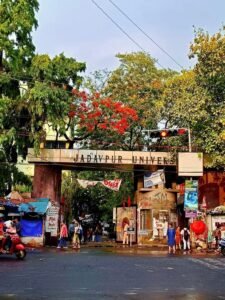
Famous for: Jadavpur University, one of India’s top-ranked universities, and the student culture that radiates from it. Political posters, second-hand book stalls, little magazines and cheap, excellent food. Jadavpur’s modern history is closely connected with the Swadeshi movement and the Partition of Bengal in 1905. The area developed as Bengali communities and educational institutions grew in southern Kolkata. Its location makes it a very important link between areas such as Dhakuria, Tollygunge, Garia and South Kolkata.
Best places: The Jadavpur University Campus campus and its open-air adda spots, the 8B bus stand, which functions as South Kolkata’s unofficial town square, and Sukanta Setu.
Eat here: Milan-da’s canteen inside the campus is the most famous student canteen in the city. The 8B stretch has rolls, momo, Chinese and biryani at student prices.
Street food: 8B’s tea-and-cigarette stalls, egg devil, chicken cutlet and the late-evening momo carts. Try Kolkata-style chicken/egg rolls, kebabs and Mughlai snacks around the Jadavpur–8B area.
Famous personality: The poet Sukanta Bhattacharya, after whom Sukanta Setu is named. Countless Bengali film-makers, writers and scientists passed through the JU gates.
Nearest metro: Jadavpur does not yet have its own station. Use Kavi Subhash or Kavi Nazrul (Blue Line).
Insider tip: Visit around 5 pm on a weekday during term. The campus adda, the book stalls and the food stalls all peak together, and this is the single best hour to understand South Kolkata’s intellectual culture. Explore around 8B in the evening for the liveliest atmosphere, street food and student crowd.
11. Lake Gardens and Rabindra Sarobar: the green lung
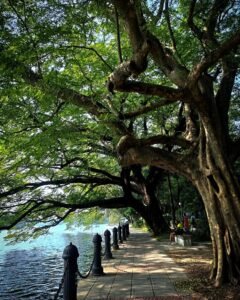
Famous for: Lake Gardens developed as a residential neighbourhood around the southern side of Rabindra Sarobar, one of Kolkata’s major urban lakes and green spaces. Rabindra Sarobar, a 73-acre artificial lake dug in the 1920s and named after Rabindranath Tagore. It is South Kolkata’s running track, rowing club, bird sanctuary and morning adda, all at once.
Best places: The Lake Kalibari temple, Nazrul Mancha auditorium, the Calcutta Rowing Club and Bengal Rowing Club boathouses, and the Safari Park children’s area.
Eat here: Lake Gardens and the Southern Avenue side have a quiet, high-quality cafe and bakery scene. Southern Avenue itself is one of the loveliest roads in the city to walk with a coffee.
Street food: Morning chaa and biscuit stalls at every lake gate, and jhal muri along Southern Avenue.
Famous personality: Rabindranath Tagore and Kazi Nazrul Islam, commemorated in the lake and the auditorium respectively.
Nearest metro: Rabindra Sarobar (Blue Line), which opens almost onto the lake.
Insider tip: Enter from the Southern Avenue gate at 6 am. You will find rowers on the water, laughing clubs, morning ragas being practised under the trees and a bird list that includes cormorants and kingfishers. It is the best free hour in South Kolkata. Visit Rabindra Sarobar early morning if you want a quieter atmosphere and better walking experience. Also, remember that carrying outside food is prohibited here.
12. Behala: the real, unpolished south
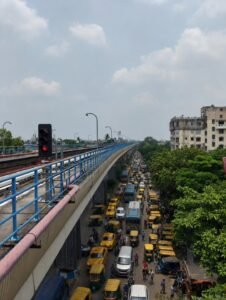
Famous for: Being the large, dense, middle-class, thoroughly Bengali counterweight to Alipore. Behala is older than most of the “new south” and has its own markets, clubs and puja rivalries. The area has deep roots in Bengal’s local culture and is traditionally associated with old residential settlements, temples and neighbourhood communities.
Best places: Behala Chowrasta, Sakher Bazar, and the Behala Durga Puja circuit (Behala Nutan Dal, Barisha Club, Sabuj Sangha), which is one of the city’s most artistically ambitious puja clusters. Behala Flying Club area — A notable part of the locality’s modern history and identity.
Eat here: Behala’s strength is neighbourhood restaurants, sweet shops and biryani counters rather than fine dining, and prices are noticeably lower than in Ballygunge. Kosha mangsho — A classic Bengali mutton preparation worth looking for at established local eateries.
Street food: Behala Chowrasta’s rolls and chops, and the Sakher Bazar sweet shops.
Famous personality: Sourav Ganguly, the former India captain and BCCI president, grew up in Behala and his family home is here.
Nearest metro: Behala Bazar, Behala Chowrasta and Sakher Bazar on the Purple Line, which runs from Joka to Majerhat.
Insider tip: Explore Barisha if you’re interested in the older side of Behala and Kolkata’s heritage.
How to plan a 3 day South Kolkata itinerary
The mistake most visitors make is zig-zagging across the south by cab. Group your days by metro line instead and you will save two hours a day.
Day 1: Heritage and temples (Blue Line, north section)
Route: Netaji Bhavan to Kalighat to Rashbehari to Ballygunge.
Start at 9.30 am at Netaji Bhavan. Walk or take a short ride to Kalighat Temple by 11 am, then Nirmal Hriday next door. Lunch on Rashbehari Avenue. Spend the afternoon at Lake Market and Deshapriya Park, then finish with an evening walk through Hindustan Park and dinner at 6 Ballygunge Place. Total walking: about 5 km.
Day 2: Green spaces, shopping and the lake (Blue Line, middle section)
Route: Rabindra Sarobar to Golpark and Gariahat to Dhakuria to Jadavpur.
Be at the Southern Avenue gate of Rabindra Sarobar by 6.30 am for the morning scene, then breakfast. Mid-morning at the Ramakrishna Mission Institute of Culture at Golpark. Shop Gariahat and Dakshinapan from about noon, with tea at Dolly’s. Reach Jadavpur and the 8B area by 5 pm for campus adda and street food. Optional: South City Mall in the evening.
Day 3: Colonial Alipore and the deep south (Purple Line)
Route: Alipore to New Alipore to Tollygunge to Behala.
Open with the Agri-Horticultural Society gardens or Alipore Zoo at 9 am, then the National Library and the Alipore Jail Museum. Cross to New Alipore for lunch. Afternoon at Tollygunge: the studio belt and the club’s outer road. Take the Purple Line from Majerhat down to Behala Chowrasta in the evening for chops, rolls and, if it is October, the puja circuit.
If you only have one day: Kalighat, Rashbehari, Rabindra Sarobar, Gariahat and Hindustan Park. That single Blue Line spine gives you temple, market, lake, shopping and cafe culture inside 8 km.
Where to stay: best areas and hotels in South Kolkata
Where you sleep matters more in Kolkata than in most Indian cities, because traffic between north and south can double your travel time. For a south-focused trip, stay south.
| Area | Best for | Typical band |
|---|---|---|
| Alipore | Luxury, quiet, close to the Maidan and the zoo. Taj Bengal is the landmark address. | Premium |
| Ballygunge and Gariahat | Food, cafes and shopping on your doorstep. Boutique hotels and serviced apartments. | Mid to premium |
| E.M. Bypass (Science City side) | Business travellers and airport runs. The large five-star properties cluster here. | Premium |
| Bhowanipore and Elgin Road | Best value. Walkable to both Park Street and south Kolkata, two metro stations nearby. | Budget to mid |
| Jodhpur Park and Golf Green | Homestays and guest houses, quiet, good for longer stays. | Budget to mid |
Practical advice on hotels in South Kolkata: book 8 to 10 weeks ahead for the Durga Puja week (late September to October), when rates in the south can triple. December and January are peak tourist season with softer but still high rates. June to August is the cheapest window, with the caveat that monsoon waterlogging is real in parts of the south. Always check the exact distance to the nearest metro station before booking, because a hotel 1.5 km from a station in Kolkata traffic is not a 15 minute walk, it is a 25 minute crawl.
Best restaurants in South Kolkata, area by area
The honest summary: for Bengali food the south beats the north and central Kolkata comfortably. For continental and bar culture, Park Street still wins. Here is where to eat, by area.
| Area | Go for | Signature order |
|---|---|---|
| Bhowanipore | Kewpie’s Kitchen, Balwant Singh’s Eating House | Bengali thali; doodh cola after midnight |
| Ballygunge | 6 Ballygunge Place | Kosha mangsho, daab chingri |
| Gariahat and Ekdalia | Bhojohori Manna | Chital macher muitha, bhetki paturi |
| Dhakuria (Dakshinapan) | Dolly’s The Tea Shop | Cold chocolate tea, tea sandwiches |
| Hindustan Park | Gupta Brothers | Kochuri with chholar dal |
| Jadavpur | Milan-da’s canteen, 8B stalls | Egg devil, chicken cutlet, cheap chaa |
| Jodhpur Park | South City Mall restaurant floor | Anything, for air conditioning and range |
South Kolkata street food you must try
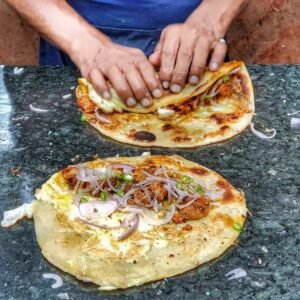
- Kathi roll. Egg, chicken or mutton wrapped in a paratha. Gariahat and Rashbehari crossings do the classic version. Expect roughly Rs 60 to Rs 160 in 2026.
- Phuchka. Kolkata’s version uses spiced mashed potato with tamarind water, not sweet chutney. Deshapriya Park and Vivekananda Park are reliable.
- Kochuri and chholar dal. A morning ritual, not a snack. Gupta Brothers in Hindustan Park, or any Jagubazar counter before 10 am.
- Telebhaja. Beguni, aloor chop, peyaji, best at dusk in Bhowanipore and Behala.
- Fish fry and chicken cutlet. The old cabin culture of Tollygunge and Russa Road, served with kasundi.
- Mishti doi and nolen gur sandesh. Winter only for the good nolen gur, roughly December to February.
- Jhal muri. Southern Avenue and Rabindra Sarobar gates, mixed in front of you in a tin.
Safety note: pick stalls with high turnover and visible frying, carry small change, and if you are new to Indian street food, start with fried items rather than water-based ones like phuchka.
South Kolkata vs North Kolkata: what is the real difference?
North Kolkata is older, denser and built around joint-family mansions, thakurdalans and 18th to 19th century lanes. South Kolkata is newer, greener and built around planned avenues, clubs and markets. North Kolkata’s Durga Puja is traditional bonedi bari and sharbojonin; South Kolkata’s is theme pandals and art installations.
| North Kolkata | South Kolkata | |
|---|---|---|
| Built | 1750s to 1900s | 1850s to 2010s |
| Streets | Narrow galis, trams | Wide avenues, flyovers |
| Heritage | Rajbaris, Jorasanko, College Street | Colonial bungalows, Art Deco blocks |
| Food | Old sweet shops, cabins, biryani | Bengali restaurants, cafes, malls |
| Best for | Heritage walks, photography | Eating, shopping, longer stays |
Getting around South Kolkata by metro
To travel all of these areas mentioned in the south kolkata area list, you should keep in mind that three metro lines serve the south. Fares run from about Rs 5 to Rs 25, trains are air-conditioned, and the metro will beat a cab at almost any hour of the day.
- Blue Line (Line 1, Dakshineswar to Kavi Subhash). The workhorse. South Kolkata stations, north to south: Rabindra Sadan, Netaji Bhavan, Jatin Das Park, Kalighat, Rabindra Sarobar, Mahanayak Uttam Kumar (Tollygunge), Netaji (Kudghat), Masterda Surya Sen (Bansdroni), Gitanjali (Naktala), Kavi Nazrul (Garia Bazar), Shahid Khudiram and Kavi Subhash (New Garia).
- Purple Line (Joka to Majerhat). Seven stations serving Behala, Thakurpukur and Joka: Joka, Thakurpukur, Sakher Bazar, Behala Chowrasta, Behala Bazar, Taratala and Majerhat. The extension towards Esplanade is still under construction.
- Orange Line (Kavi Subhash to Beleghata). Runs along the E.M. Bypass and is useful for the Bypass-side south: Kavi Subhash, Satyajit Ray (Hiland Park), Jyotirindra Nandi, Kavi Sukanta (Kalikapur), Hemanta Mukhopadhyay (Ruby Crossing) and onward to Beleghata.
2026 service note worth knowing: structural repairs at Kavi Subhash have affected Blue Line services at the southern terminus since mid-2025, with trains at times short-terminating at Shahid Khudiram. Check the day’s status on the Metro Railway Kolkata site or app before you plan a Garia or New Garia trip.
What the metro does not cover: Gariahat, Ballygunge Phari, Jadavpur and Alipore’s core all still need a last-mile hop. Use an app cab, an auto on the fixed shared routes, or, on Rashbehari and Tollygunge stretches, the tram where it still runs.
Quick reference table: all 12 South Kolkata areas
| Area | Famous for | Nearest metro | Best for |
|---|---|---|---|
| Bhowanipore | Netaji Bhavan, mixed food culture | Netaji Bhavan | History, late night food |
| Kalighat | Kali Temple, Shakti Peetha | Kalighat | Pilgrimage, photography |
| Rashbehari | Lake Market, Deshapriya Park | Kalighat | Markets, street food |
| Ballygunge | Old money, Satyajit Ray, cafes | Rabindra Sarobar | Dining, architecture |
| Gariahat and Golpark | Saree market, Institute of Culture | Rabindra Sarobar | Shopping |
| Alipore | Zoo, National Library, bungalows | Majerhat | Families, greenery |
| New Alipore | Planned blocks, Suruchi Sangha | Majerhat | Quiet stays, puja |
| Tollygunge | Tollywood, Tollygunge Club | Mahanayak Uttam Kumar | Film history, cabins |
| Jodhpur Park and South City | South City Mall Kolkata | Rabindra Sarobar | Shopping, families |
| Jadavpur | Jadavpur University, 8B adda | Mahanayak Uttam Kumar | Budget food, culture |
| Lake Gardens and Rabindra Sarobar | The lake, morning walks | Rabindra Sarobar | Runners, birders |
| Behala | Sourav Ganguly, puja circuit | Behala Chowrasta | Authentic para life |
Frequently asked questions about South Kolkata
Which is the richest area in South Kolkata?
Alipore is the richest area in South Kolkata and in the city as a whole, with the highest property values, the largest plots and the colonial bungalow stock. Ballygunge and parts of Jodhpur Park follow closely, and the high-rise towers along the E.M. Bypass command similar prices per square foot.
What is South Kolkata famous for?
South Kolkata is famous for Kalighat Temple, its theme-based Durga Pujas, Rabindra Sarobar lake, Gariahat’s saree market, the Tollywood film industry in Tollygunge, its cafe and Bengali restaurant culture, and the colonial heritage of Alipore.
How many areas are there in South Kolkata?
There is no single official count, because South Kolkata is a colloquial region rather than an administrative unit. In practice, the 12 neighbourhoods in this South Kolkata area list cover everything a visitor or new resident needs; a broader list of areas in South Kolkata would also include Dhakuria, Bansdroni, Garia, Golf Green, Kasba, Haltu, Naktala and Thakurpukur.
Is South Kolkata safe for tourists?
Yes. Each places in this South Kolkata area list is one of the safer urban areas in India, including for solo women travellers, and the markets and main roads stay busy late. Standard precautions apply: watch your belongings in Gariahat and at the Kalighat temple crowd, agree on fares or use app cabs, and avoid deserted lanes after midnight.
Which metro line covers South Kolkata?
The Blue Line (Line 1) covers most of South Kolkata from Rabindra Sadan down to Kavi Subhash. The Purple Line serves Behala and Joka, and the Orange Line serves the E.M. Bypass side. Gariahat, Ballygunge Phari and Jadavpur still require a short last-mile ride.
What is the best time to visit South Kolkata?
October to February. October brings Durga Puja, when the south’s pandals are at their most spectacular, and November to February gives you dry 14 to 26 degree weather that is ideal for walking. Avoid May and June for heat, and mid-June to September for monsoon waterlogging.
How many days do you need for South Kolkata?
Three days covers it comfortably using the itinerary above. Two days is enough for the highlights. One day works if you stay on the Blue Line spine from Kalighat to Gariahat.
Is South Kolkata better than North Kolkata to stay in?
For most visitors, yes. South Kolkata has better hotels, more restaurants, more green space and easier traffic, while North Kolkata is denser and better suited to day trips for heritage walks than to overnight stays.
Final word
Use this South Kolkata area list as a map rather than a checklist. The south rewards slowness: one morning at Rabindra Sarobar, one afternoon bargaining on the Gariahat pavement, one evening of adda at 8B will teach you more about the city than a week of monument-hopping. Start with the three day itinerary, pick the metro line that matches your interests, and let the paras do the rest.
Ready to Start Your journey of South Kolkata?
Follow Explore Kolkata for more heritage spots, and hidden corners of the City of Joy.