The 10 most famous street food points in Kolkata, ranked by search visibility and reputation, are Tiretti Bazaar, Kusum Rolls, the phuchka stalls around Vivekananda Park, Anadi Cabin, Balaram Mullick & Radharaman Mullick, Adi Haridas Modak, Chitto Babur Dokan in Dacres Lane, Tewari Brothers, Sharma Tea House, and Kona Dokan. Between them they cover almost a century and a half of Kolkata’s street food history, from a 250-year-old kochuri shop to a Mughlai paratha joint that has fed the city since 1925.
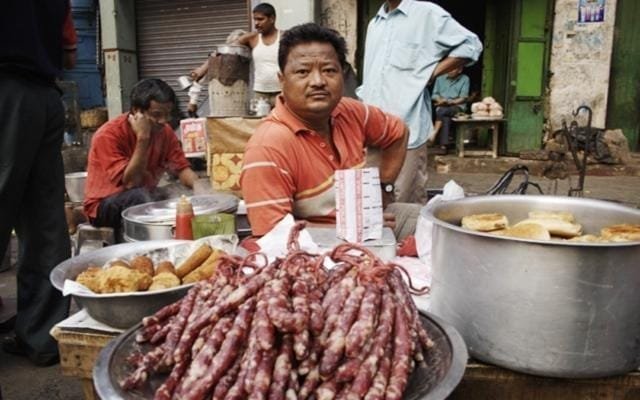
Tiretti Bazaar sits at the heart of one of India’s oldest Chinese settlements, and every morning between roughly 6 and 9 AM, a temporary breakfast market takes over the lanes near Poddar Court. Elderly vendors, many running stalls passed down through generations, sell fresh dim sum, pork buns, fish ball soup, and rice noodles found nowhere else in the city in quite this form. It has become one of the most talked-about food experiences in Kolkata precisely because it exists on borrowed time each day, gone by mid-morning as if it never happened.
What to eat: pork buns, dim sum, fish ball soup, rice noodles. Price range: ₹20 to ₹80 per item. Nearest metro: Central, a short walk away.
Insider tip: arrive by 7 AM. The market packs up fast, and the best stalls sell out well before the official closing hour.
2. Kusum Rolls, Park Street
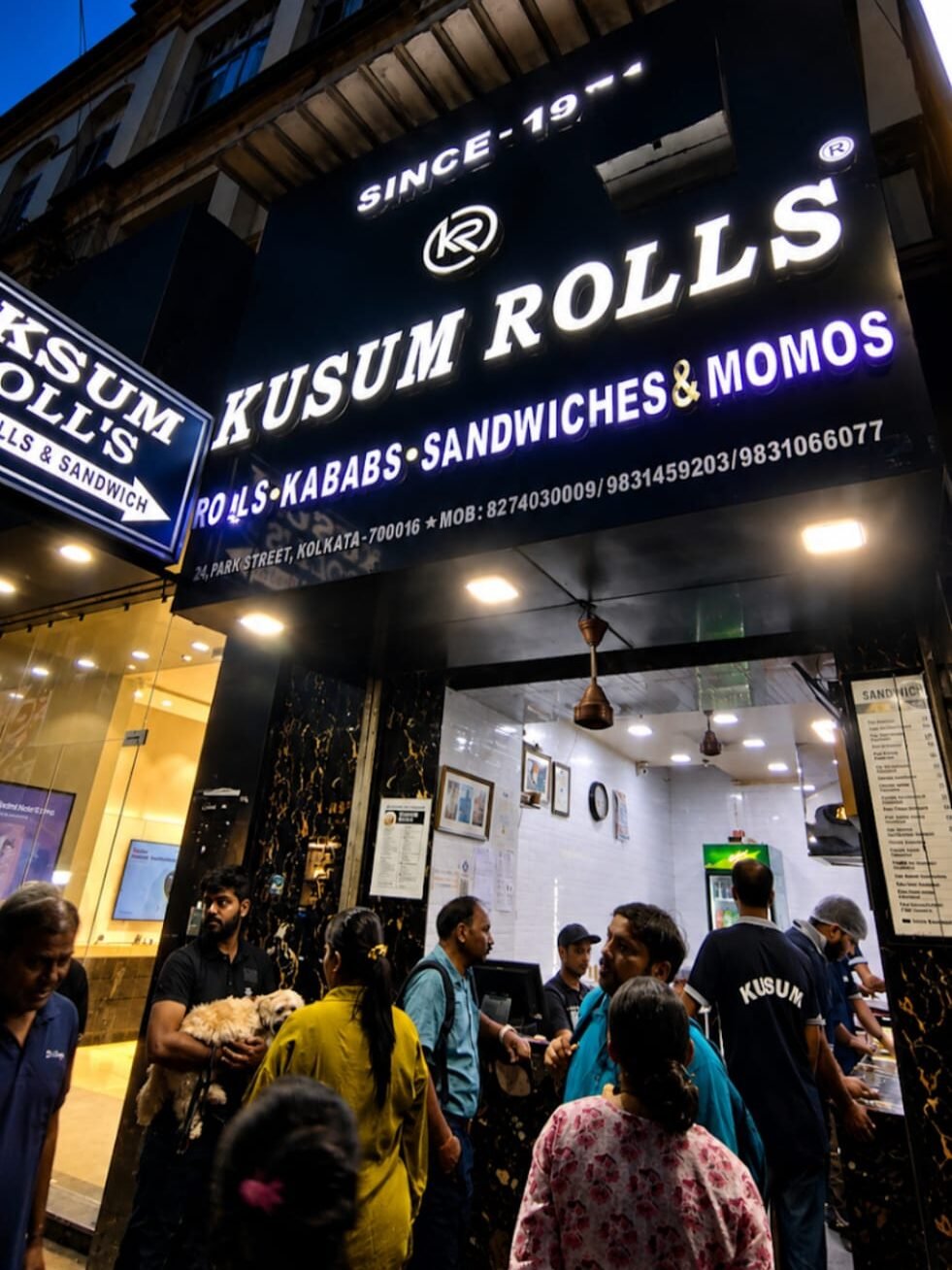
Kusum Rolls built its name on one thing done consistently well for decades: rolls, stuffed generously and cooked fast on a roadside-style setup just off Park Street. It represents a heavier, more modern school of roll-making than its New Market rivals, with thicker parathas and a filling-to-bread ratio that regulars swear by.
What to eat: double chicken roll, double mutton egg roll. Price range: ₹80 to ₹180. Nearest metro: Park Street.
Insider tip: it is a stand-and-eat or takeaway spot, not a sit-down restaurant. Bring cash and expect a short line at peak lunch hours.
3. Vivekananda Park Phuchka Stalls
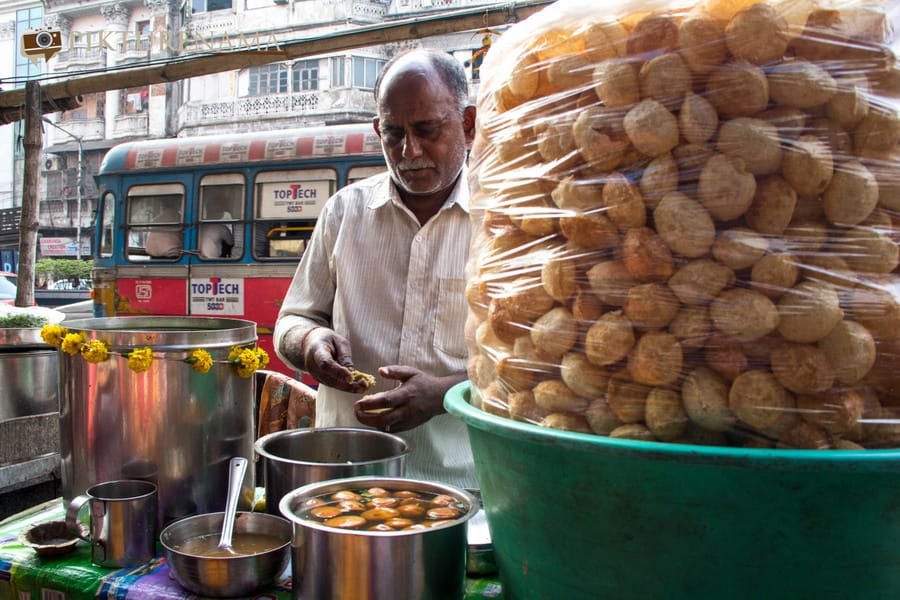
The stretch outside Vivekananda Park and along Southern Avenue is considered one of the most reliable strips in the city for phuchka, the Kolkata name for what much of India calls pani puri. Several stalls compete side by side here, which keeps standards high and gives visitors the rare chance to compare styles in a single stop.
What to eat: classic tamarind-water phuchka, dahi phuchka, churmur. Price range: ₹20 to ₹40 for a full plate. Nearest metro: Jatin Das Park, right by the stalls.
Insider tip: go in the early evening when stalls are freshly stocked. Late-night visits sometimes mean the best vendors have already sold out.
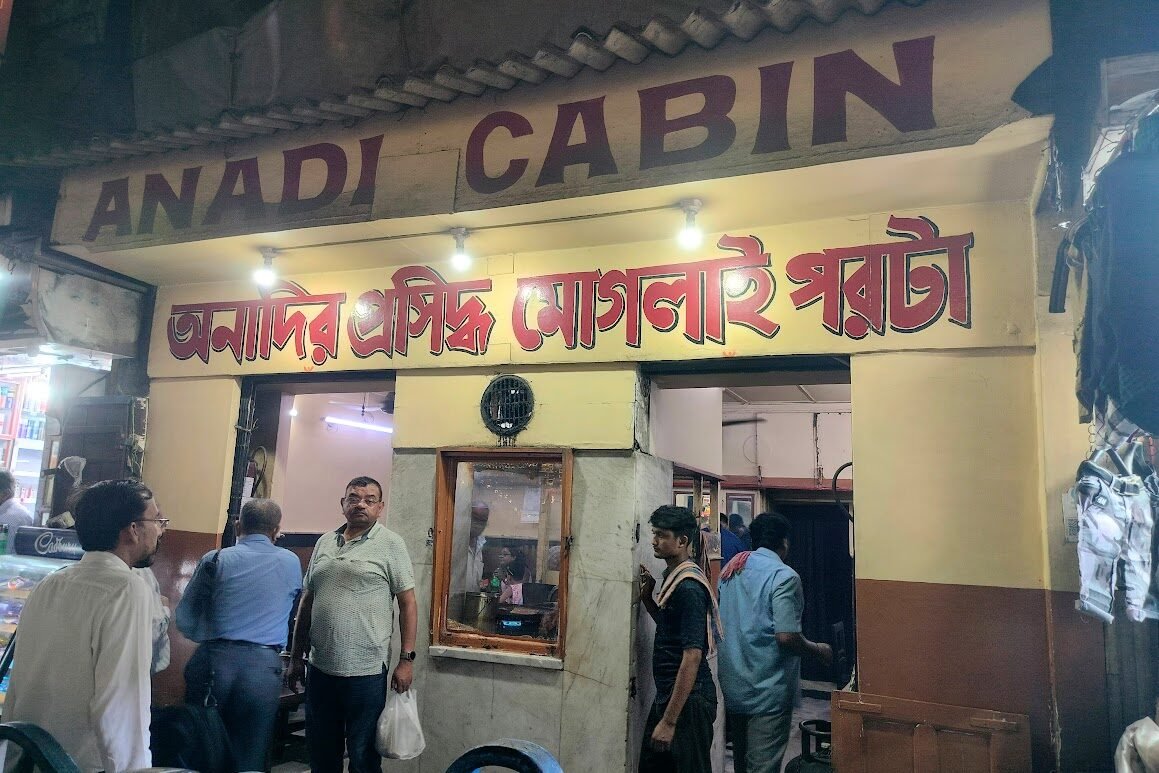
4. Anadi Cabin, Esplanade
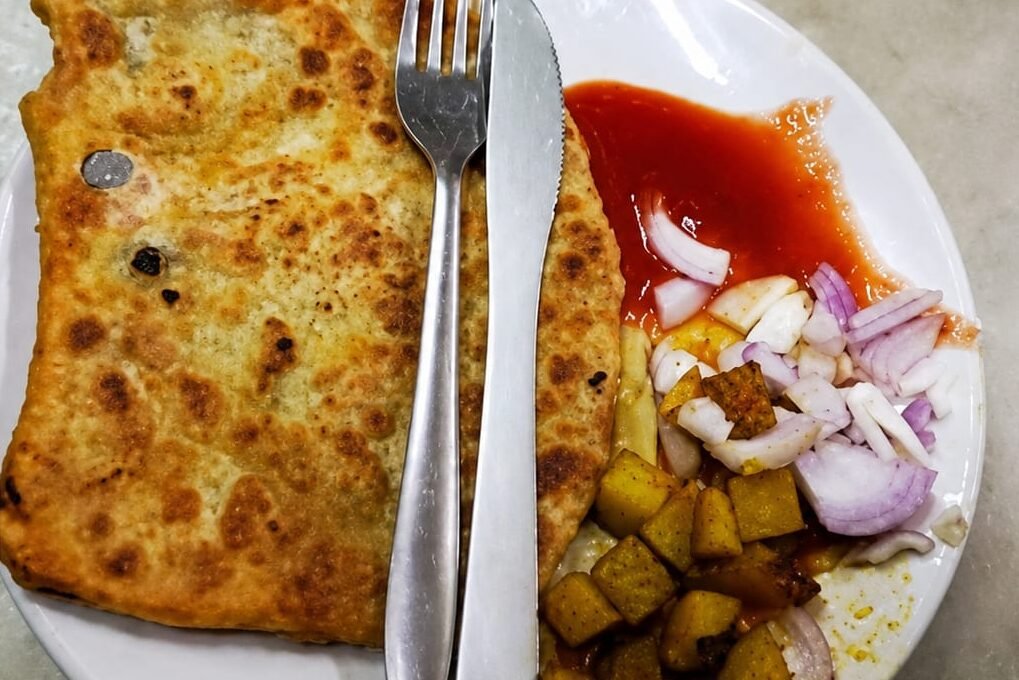
Mughlai paratha at Anadi Cabin
Anadi Cabin opened in 1925, founded by Balaram Jana and named after his son Anadi, who died young of pneumonia. Nearly a century later, it remains the name most associated with Mughlai paratha in Kolkata, a hand-stretched dough parcel filled with minced meat and egg, folded and shallow-fried until golden. Generations of Bengali film stars and college students alike have eaten here, and the cabin-style seating still carries a whiff of the old Kolkata “cabin” culture, once known as discreet meeting spots for couples.
What to eat: mutton or chicken Mughlai paratha, fish cutlet, kabiraji cutlet. Price range: ₹100 to ₹250. Nearest metro: Esplanade.
Insider tip: order the double-egg version if you want the richer, more indulgent take on the classic.
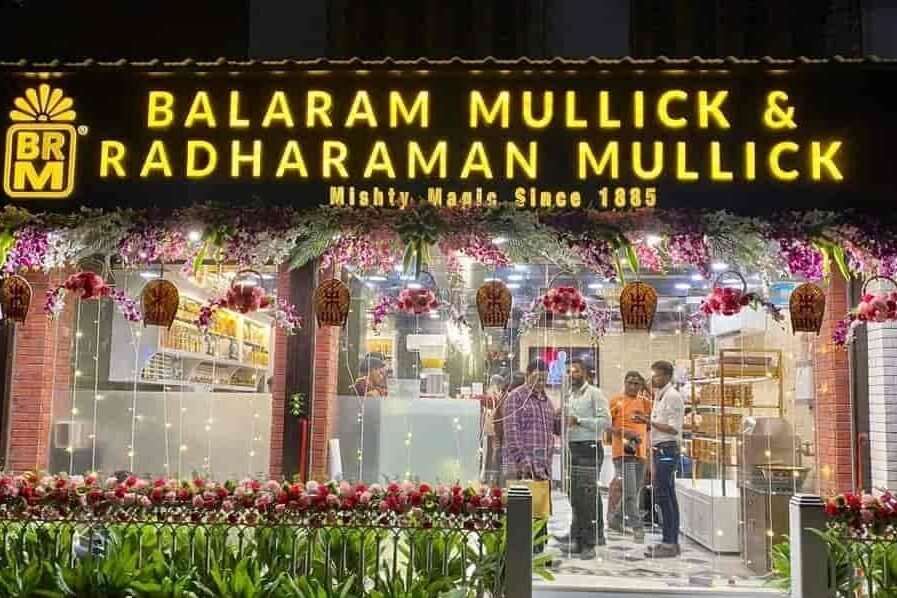
5. Balaram Mullick & Radharaman Mullick
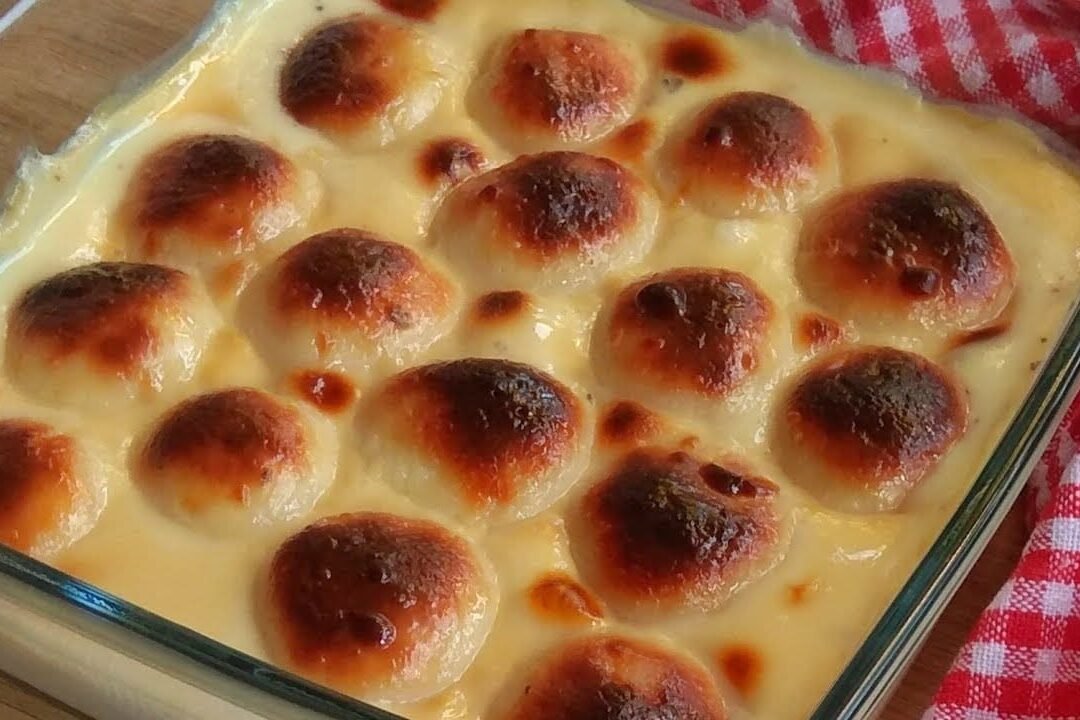
the famous baked rasgulla
Founded in 1885 by Ganesh Chandra Mullick in Bhowanipore, this heritage sweet shop chose to set up in what was then an undeveloped part of South Kolkata, betting correctly that the area would grow. Four generations later, it is best known for pioneering the baked rasgulla, a Western-style twist on the classic Bengali sweet, alongside traditional nolen gur sandesh made with fresh date-palm jaggery.
What to eat: baked rasgulla, nolen gur sandesh, mishti doi. Price range: ₹20 to ₹50 per piece. Nearest metro: Netaji Bhavan or Elgin, both a short auto ride from the original Bhowanipore outlet.
Insider tip: nolen gur sweets are seasonal, best from November to February when fresh date-palm jaggery is available. Ask before assuming it is in stock outside winter.
6. Adi Haridas Modak, Shyambazar
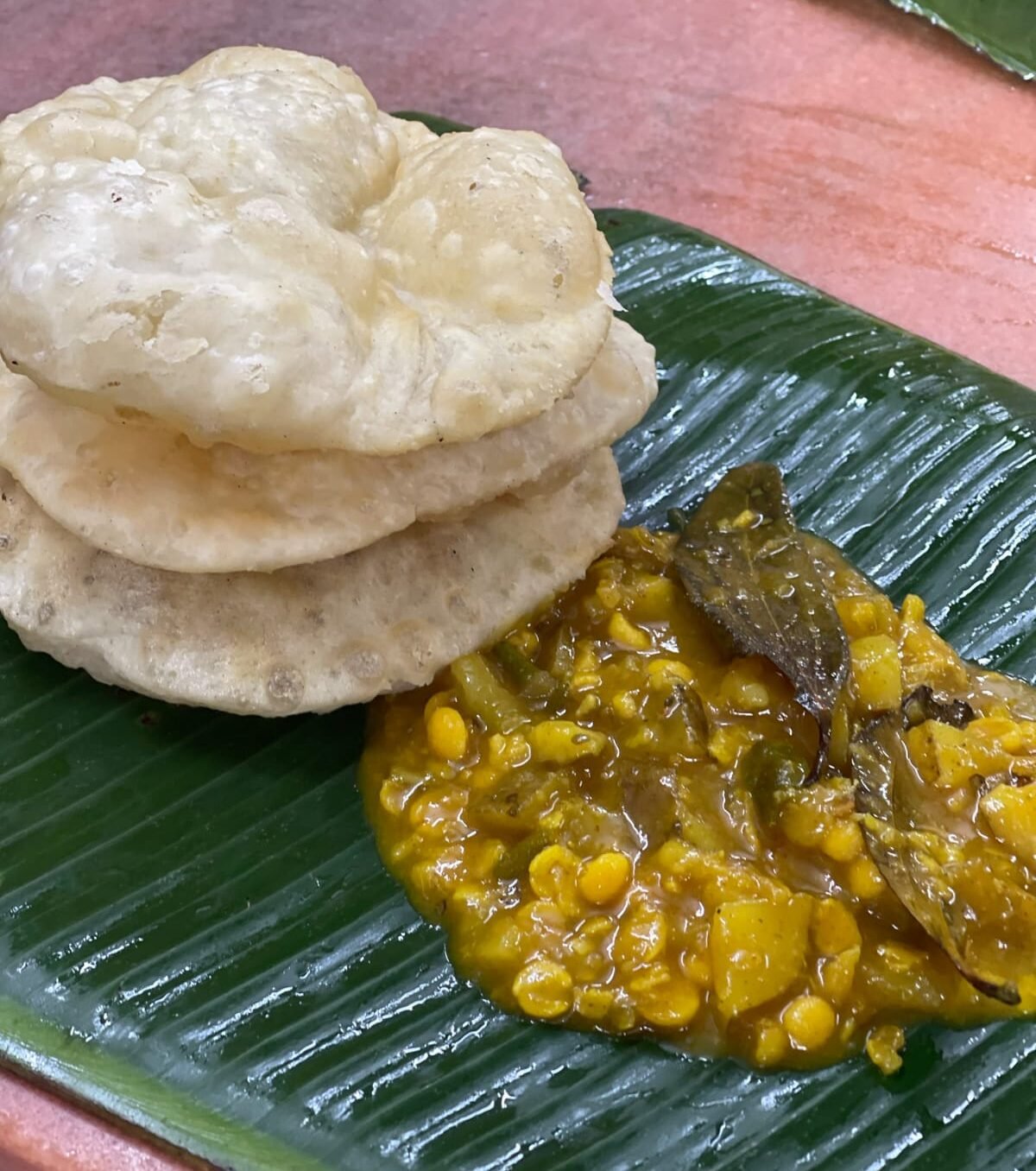
Breakfast at Adi Haridas Modak
Adi Haridas Modak has been serving breakfast from the same spot at Shyambazar’s five-point crossing since around 1770, making it one of the oldest continuously running eateries in the city. Its signature luchi and kochuri, served with cholar dal on fresh banana leaves, have reportedly been eaten by figures as significant as Raja Ram Mohan Roy and Netaji Subhas Chandra Bose, cementing its place in Kolkata’s cultural memory well beyond food circles.
What to eat: kochuri or luchi with cholar dal, langcha, rasgulla. Price range: ₹100 to ₹150 for two people. Nearest metro: Shyambazar.
Insider tip: kochuri is served only until around 11 AM, after which the menu switches to luchi with aloo sabzi. Go early if the kochuri is what you are after.
7. Chitto Babur Dokan, Dacres Lane
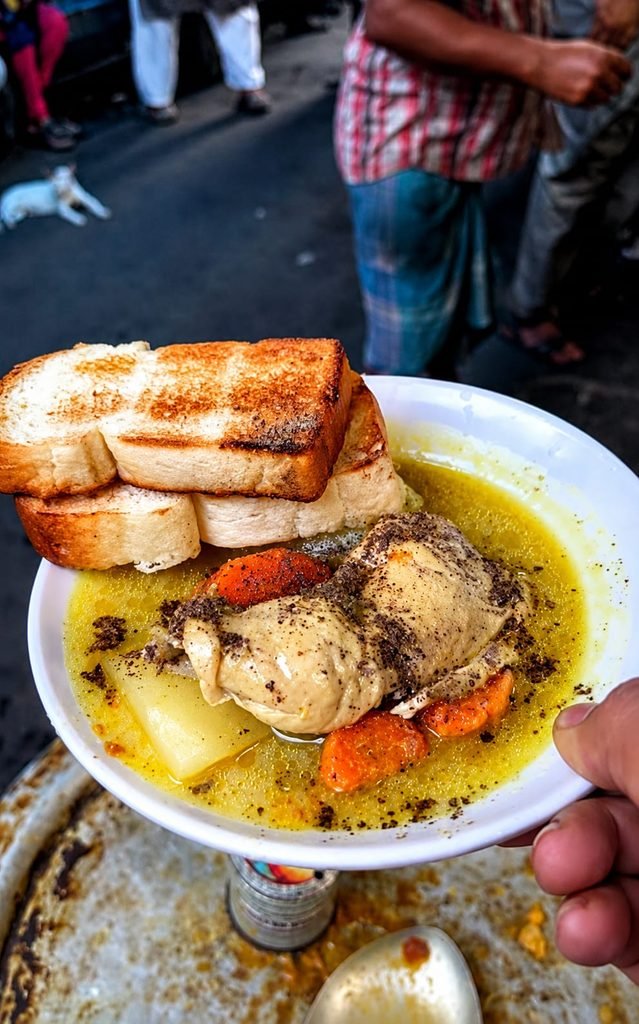
the famous chicken stew and butter toast of Dacres Lane
Established in 1947 by Shrish Ranjan Roy and named after his eldest son Chitto, this hole-in-the-wall stall in Dacres Lane, Kolkata’s historic “Office Para” food street, has served the same chicken stew and buttered toast for nearly eight decades. The stew, a comforting Anglo-Bengali hybrid of tender chicken and mild spices, has become one of the most searched food terms tied to Kolkata’s street food scene, and the shop is still run by Roy’s descendants using unchanged recipes.
What to eat: chicken stew with toast, diamond fish fry, fish kabiraji. Price range: ₹100 to ₹250. Nearest metro: Esplanade.
Insider tip: this is a lunchtime spot for office workers, so go between noon and 2:30 PM to catch it at its liveliest, and expect to eat standing or on a shared wooden bench.
8. Tewari Brothers, Burrabazar
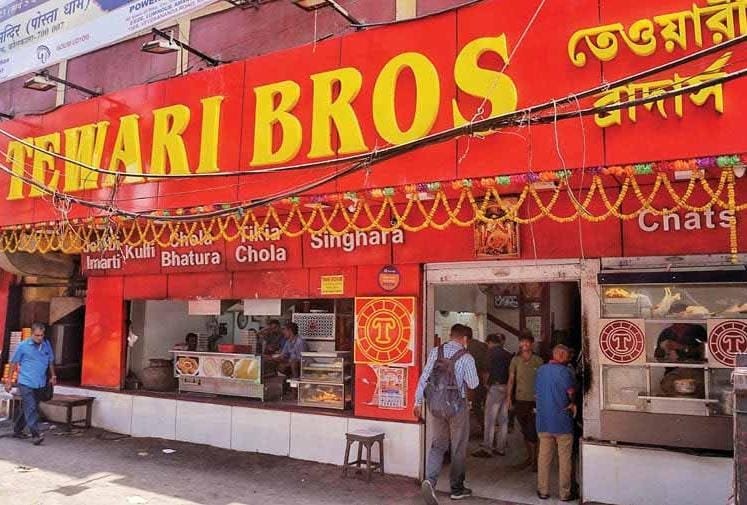
Founded around six decades ago by Banwari Lal Tewari, who travelled from Uttar Pradesh to Kolkata to build a sweet-making business, Tewari Brothers has become one of Burrabazar’s most reliable stops for North Indian-style ghee sweets and snacks. Its imarti and kaju barfi draw particular praise, and the shop’s onion- and garlic-free kitchen reflects the Marwari dietary traditions of much of its original clientele.
What to eat: imarti, kaju barfi, samosas, raj kachori. Price range: ₹100 to ₹300 for a mixed box. Nearest metro: Central or Mahatma Gandhi Road.
Insider tip: festival season brings long queues for pre-booked sweet boxes. Order a day ahead around Diwali or Holi if you want to skip the wait.
9. Sharma Tea House, Bhowanipore
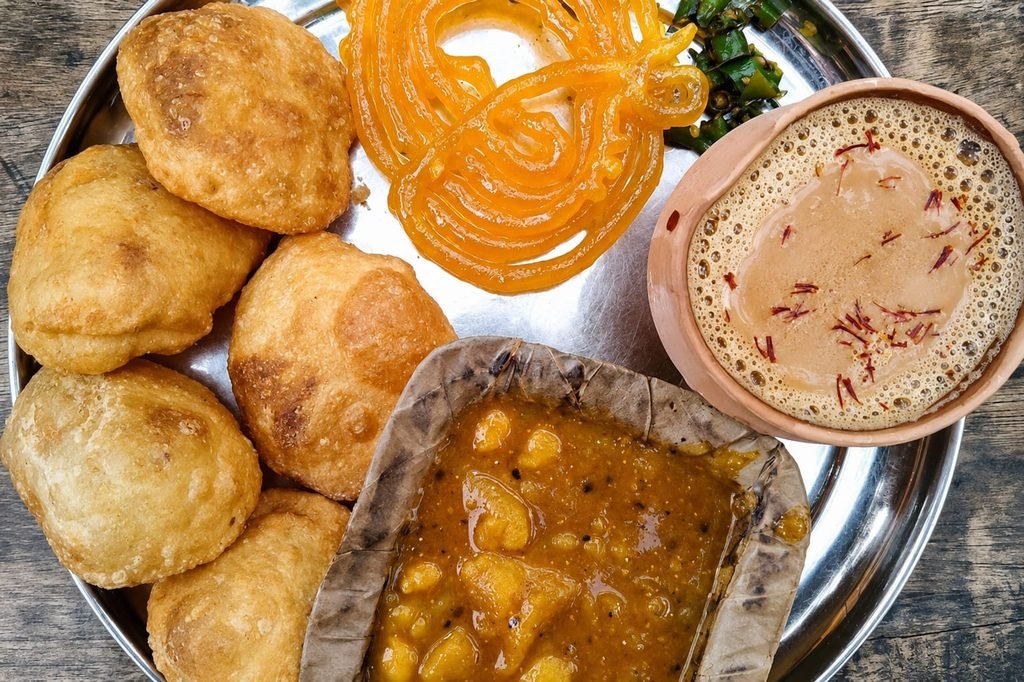
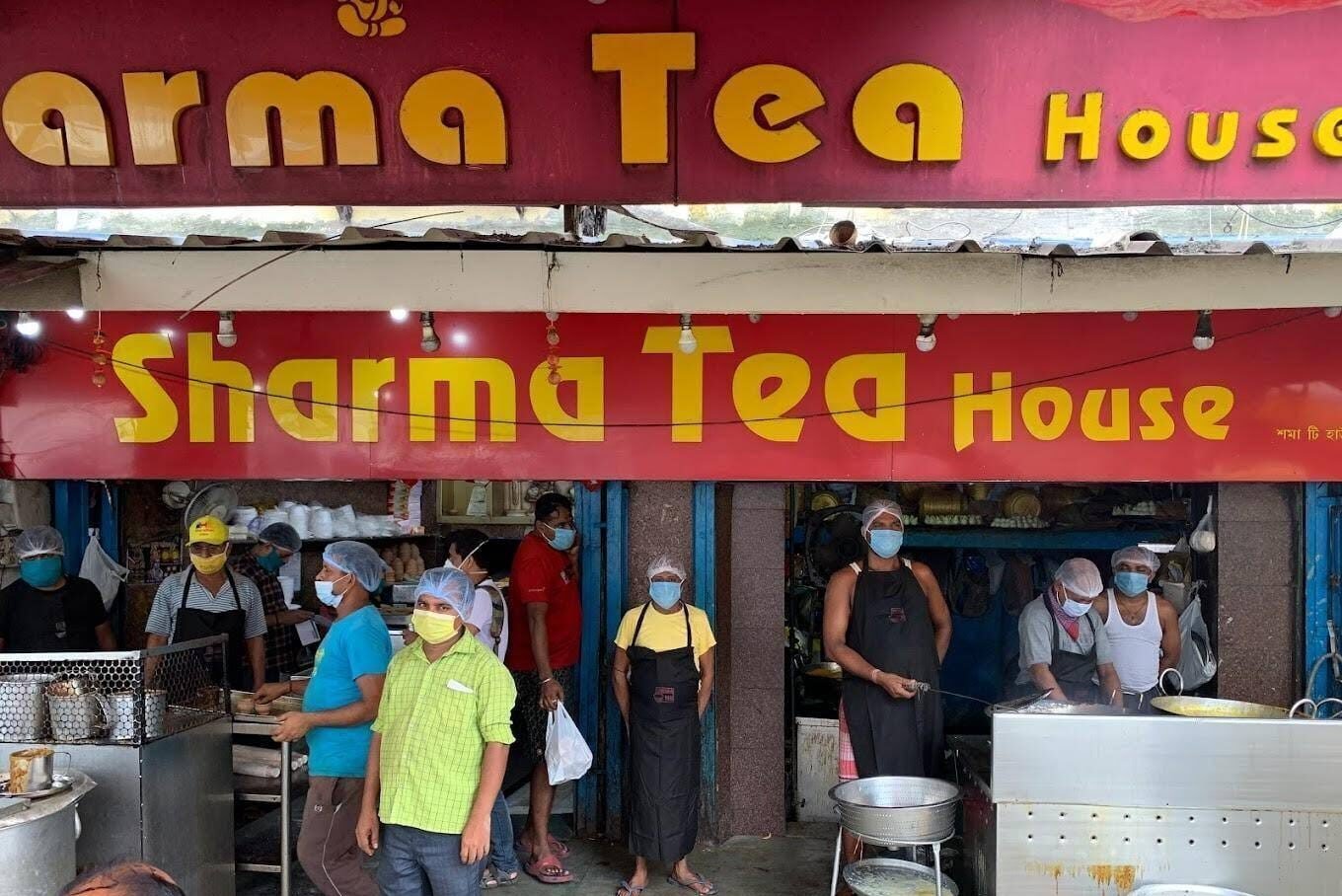
the classic khasta kachori and aloo sabzi ; with chai and jalebi
Tucked on Shambhunath Pandit Street in Bhowanipore, Sharma Tea House has built a loyal following since long before food blogging existed, on the strength of a simple combination: khasta kachori, aloo sabzi, and kulhad chai served in traditional clay cups. Longtime regulars, some visiting since their college days decades ago, describe it as one of the few places in the city where a cup of tea still costs less than the nostalgia attached to it.
What to eat: khasta kachori with aloo sabzi, kulhad chai, jalebi. Price range: ₹50 to ₹150. Nearest metro: Rabindra Sadan or Elgin.
Insider tip: it is primarily a takeaway or standing counter, so go with a plan to eat nearby rather than expecting table seating.
10. Kona Dukan, BBD Bagh
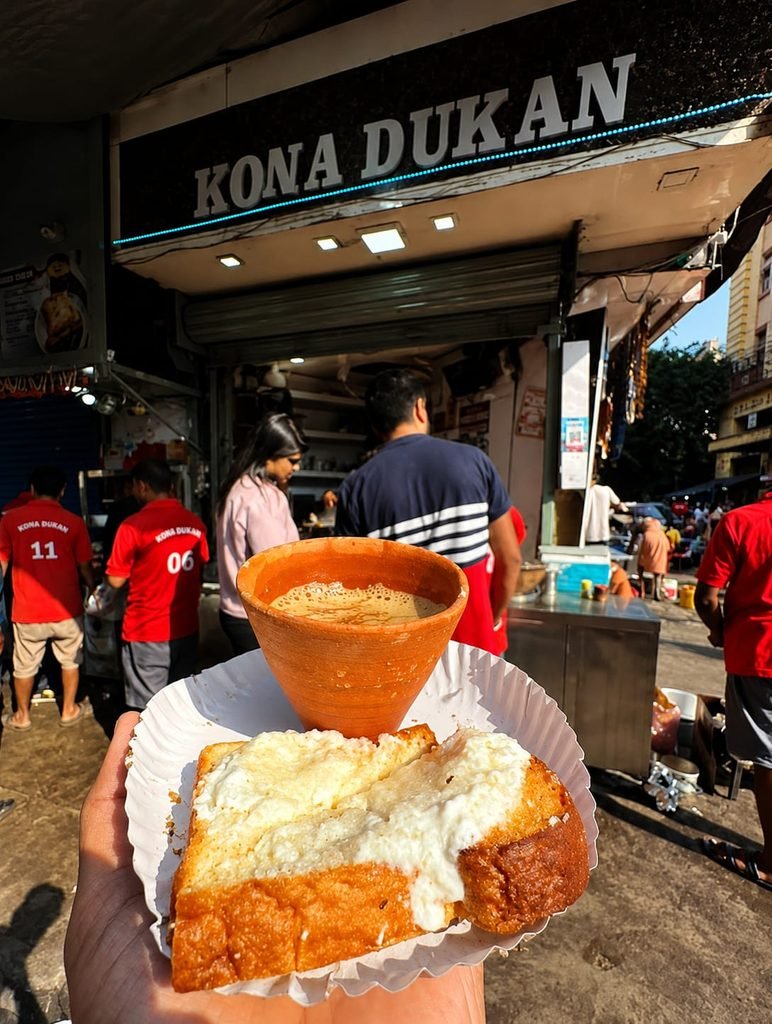
malai toast with chai at Kona Dukan
Tucked into the business district near the Calcutta Stock Exchange in BBD Bagh, Kona Dukan is a small, ever-busy tea and toast counter that has fed office workers on their breaks for years. It is best known for a single indulgent item: malai toast, a rich, creamy take on the humble bread-and-butter snack, though its sandwiches and saffron tea also draw a steady crowd during lunch hours.
What to eat: malai toast, cheese corn sandwich, saffron tea. Price range: ₹30 to ₹80. Nearest metro: Central or Esplanade.
Insider tip: this is very much an office-crowd secret. Visit around late morning or early afternoon, since it winds down once the business district empties out in the evening
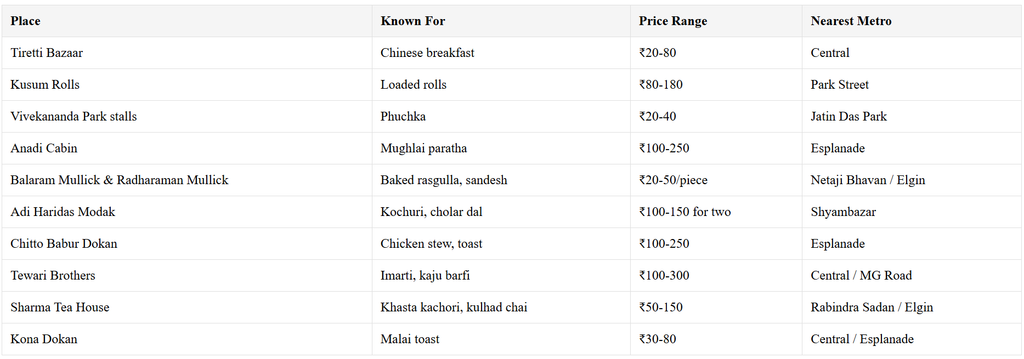
Quick reference table
Frequently asked questions
What is the oldest street food spot in Kolkata?
Adi Haridas Modak in Shyambazar dates back to around 1770, making it one of the oldest continuously running eateries in the city, roughly 250 years old.
What is the best time to visit Tiretti Bazaar?
Between 6 and 9 AM. It is a breakfast-only market and most stalls pack up by mid-morning, so arriving by 7 AM gives you the widest selection.
Where did the Mughlai paratha originate in Kolkata?
Anadi Cabin in Esplanade, founded in 1925, is the name most closely associated with popularising the Mughlai paratha in the city, and it remains the benchmark most locals measure other versions against.
Is Kolkata street food safe for first-time visitors?
Generally yes, especially at busy, high-turnover stalls where food is cooked fresh in front of you. Stick to vendors with a steady stream of local customers and avoid food that has been sitting out for a while.
Hungry for more of Kolkata?
Follow Kolkata Bites for more legendary eateries, street food guides, and honest food reviews from around the city.
3 thoughts on “THE BEST STREET FOOD POINTS IN KOLKATA”

Looks like Super tasty. Great recommendations!
The FAQ section being always the best part of the blog .
Detailed info